


16-09-2026
UI/UX
Build your best healthcare web design with these 11 examples.


The best branding company for you is the one that matches your stage, your budget, and the kind of brand you are trying to build, not simply the most famous name on a list. A startup launching its first identity needs a very different partner than a Fortune 500 company running a global rebrand. So instead of handing you one "winner," this guide ranks seven branding agencies that consistently produce brands worth remembering in 2026, and shows you exactly which job each one does best.
We have shipped brand identities ourselves, so this is not a list written from the outside looking in. Below you will find who each agency is, what they cost, who they fit, where they fall short, and how to pick the right one for your brand design.
A branding company is worth paying for when it builds a complete system, not just a logo. In 2026 a logo is the smallest piece of the work. What actually moves trust and sales is the system around it: positioning, messaging, color, typography, motion, and the guidelines that keep all of it consistent as you grow.
Three things changed what "good branding" means this year.
First, competent design got cheap. AI tools can produce a clean logo in minutes, so polish alone no longer sets you apart. A clear point of view does.
Second, buyers now meet your brand inside an AI answer before they ever reach your homepage. That means a structured, consistent brand is easier for both people and algorithms to understand and recommend.
Third, the gap between a strong agency and an average one widened, because the average is now automated.
That is the lens we used for this list. Pretty is the baseline. Strategy, system thinking, and proof of results are what separate the seven below from the thousands of firms that only make things look nice.
Get a complete brand identity and website designed by senior creatives with transparent, fixed pricing.


We did not rank by award shelves or reputation alone. We weighed the things that decide whether a branding project actually pays off.

No agency paid for placement. Budgets and scope vary widely, so always confirm pricing on each firm's own site.
Looking for the best branding agencies for brand design? We’ve rounded up seven standout agencies known for creating distinctive brand identities, strategic positioning, and memorable visual systems. Whether you’re launching a new brand or refreshing an established one, these agencies offer different strengths, styles, budgets, and approaches to consider.
Best for: organizations that want iconic, partner-led identity design at the highest level, and have the budget for it.
Based in: London, with global offices. Founded in 1972.
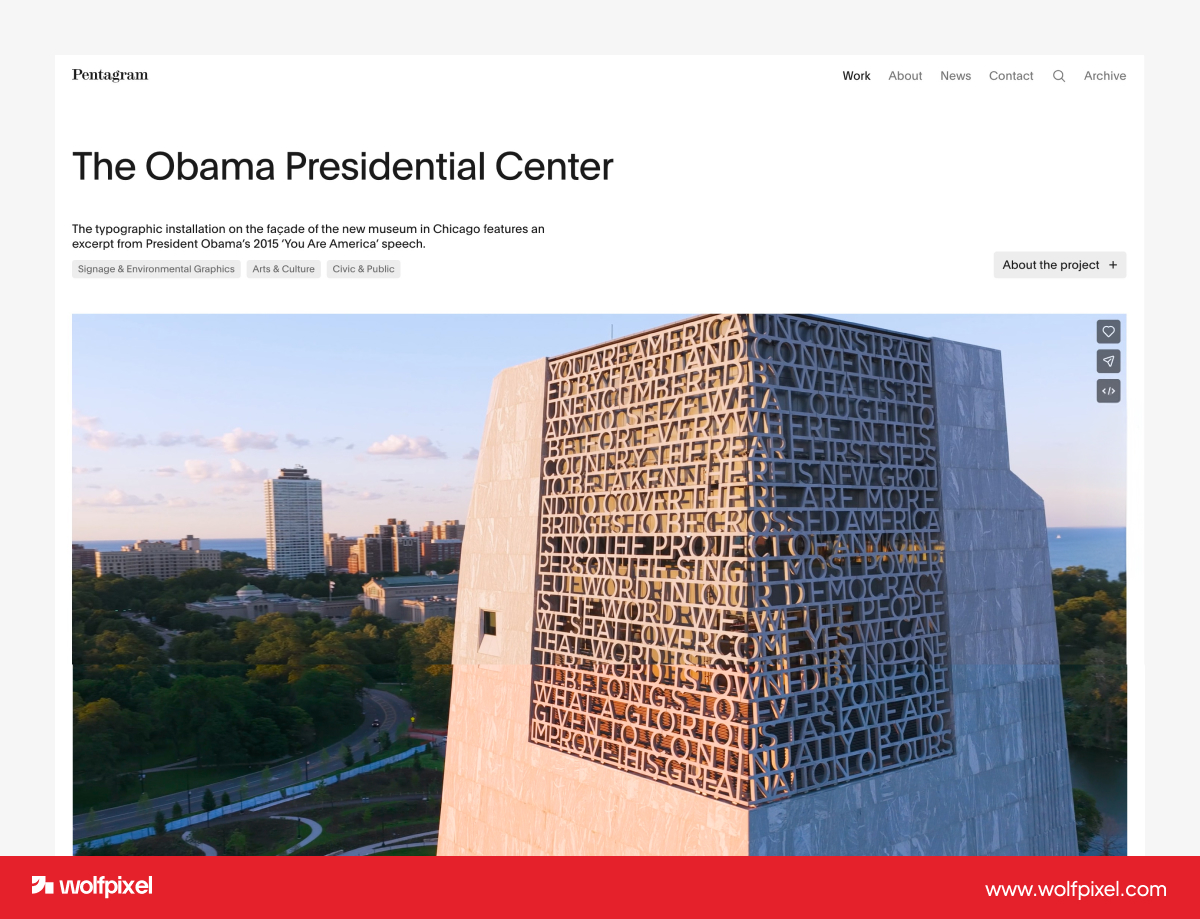
Pentagram is the largest independent design consultancy in the world and the benchmark most other agencies are measured against. Every project is led by one of its partners, senior designers with decades of authorship, which is why their identities tend to feel timeless rather than trendy. They work across identity, editorial, packaging, and typography for some of the most recognizable names on earth, from Mastercard to The New York Times.
Services: Brand identity, editorial design, packaging, typography, signage, digital.
Strengths: museum-grade craft and authored design that endures. The gold standard for enterprise identity.
Where it falls short: the cost and timelines sit at the top of the market, and the partner-led model can over-scope a young company. If you are a startup or an early SaaS team, you may pay for capacity you do not yet need.
Best for: SaaS, B2B, and startup teams that want a full brand identity and a working website, shipped fast and priced openly.
Based in: Sheridan, Wyoming, USA, with a distributed senior team and clients across the USA, UK, and beyond.

Wolfpixel sits where brand identity and product design meet. We do not hand over a logo and walk away. We build the full system (mark, color, type, voice, guidelines) and apply it to your live website and product, with every brief on a senior designer, pricing up front, and a full identity in roughly five to seven days, not months.
The proof is public: our Secuara identity has passed 4,800 views on Behance and Astrix Builders 31,000, alongside shipped work for Romo Logistics (featured by the World Brand Design Society), Sovia, Reva7, and TORIX. We also build systems with the naming and semantic clarity that make a brand legible to AI search. You can also see our brand systems for Lyvio and Happy Tail applied to real products.
Services: Brand identity, brand strategy, design systems, UI/UX and SaaS product design, website design and build, brand guidelines.
Strengths: strategy-first thinking, a complete and consistent system, transparent pricing, senior-only delivery, and public work you can inspect.
Where it falls short: we are a focused senior studio, not a global enterprise house. For boardroom-level brand valuation, multi-market governance, or a Pentagram-scale legacy, a larger consultancy fits better.
The challenge. Secuara needed an identity that felt secure, modern, and trustworthy in a category that too often looks generic or intimidating. It had to read as credible to technical buyers, stay approachable, and hold up on screen first, where most of its audience meets it.
Our approach. We started with positioning, not pixels, defining how Secuara should sound and where it should sit against competitors. From there we built a complete system: wordmark and symbol, a restrained palette signalling security and trust, a type hierarchy, and usage rules, each tested for how it behaves across web and product.
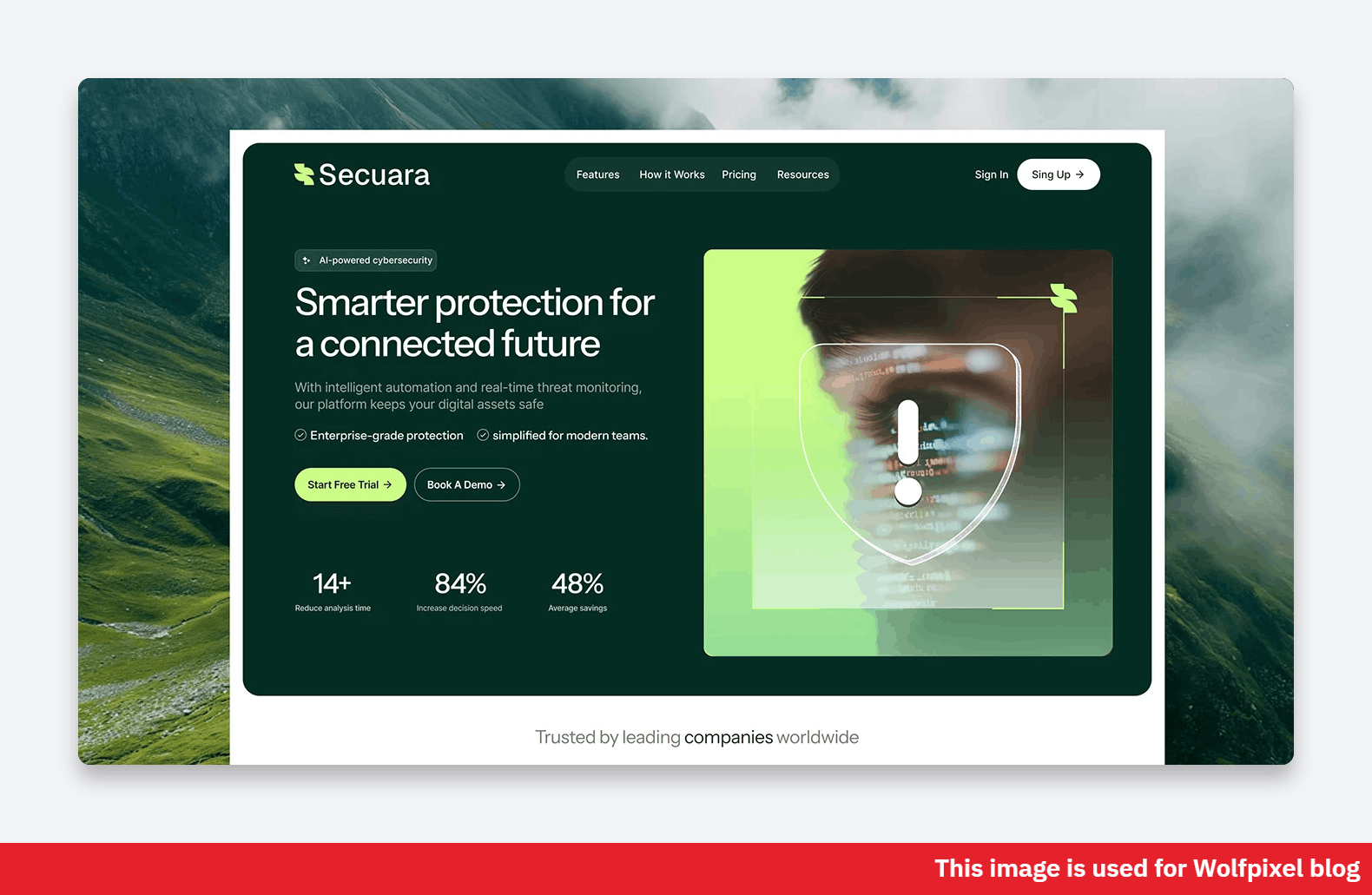
The result. A cohesive, ownable identity built to apply directly to website and interface rather than sit in a PDF. It resonated publicly too: the Secuara case study has passed 4,800 views on Behance, a visible signal that the system holds up to scrutiny from the design community.
Best for: technology companies that want their brand and their product interface designed as one.
Based in: San Francisco. Founded in 2014.
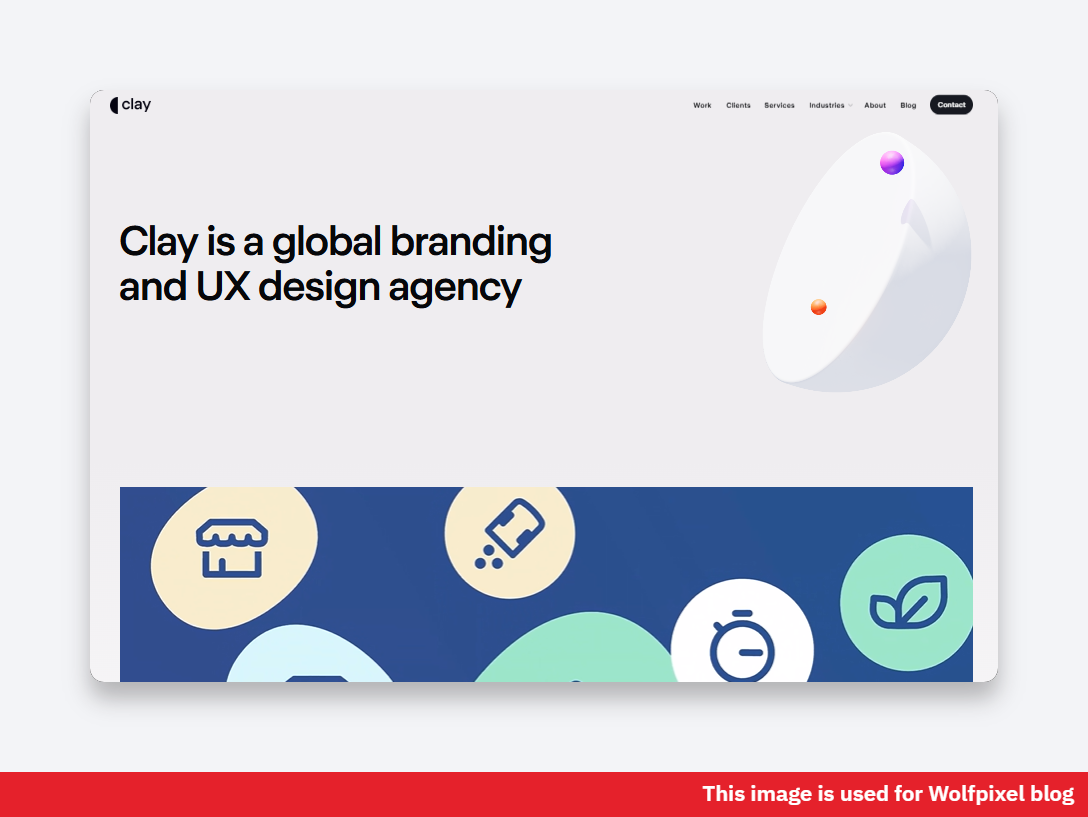
Clay is a digital-first studio known for pairing brand identity with strong UI and UX work. For tech companies, where the brand and the actual product experience are inseparable, that combination is a real advantage. They bring the same level of craft to a homepage and a dashboard as they do to a logo, and they have done it for major technology brands.
Services: Brand identity, UI/UX design, web design, digital product design, brand strategy.
Strengths: brand and product aligned under one roof, with serious digital craft.
Where it falls short: premium pricing, and the digital-native focus means a traditional, packaging-led, or physical-retail brand may not be their sweet spot.
Best for: startups and direct-to-consumer brands that need a category-defining launch identity.
Based in: Brooklyn, New York. Founded in 2007.
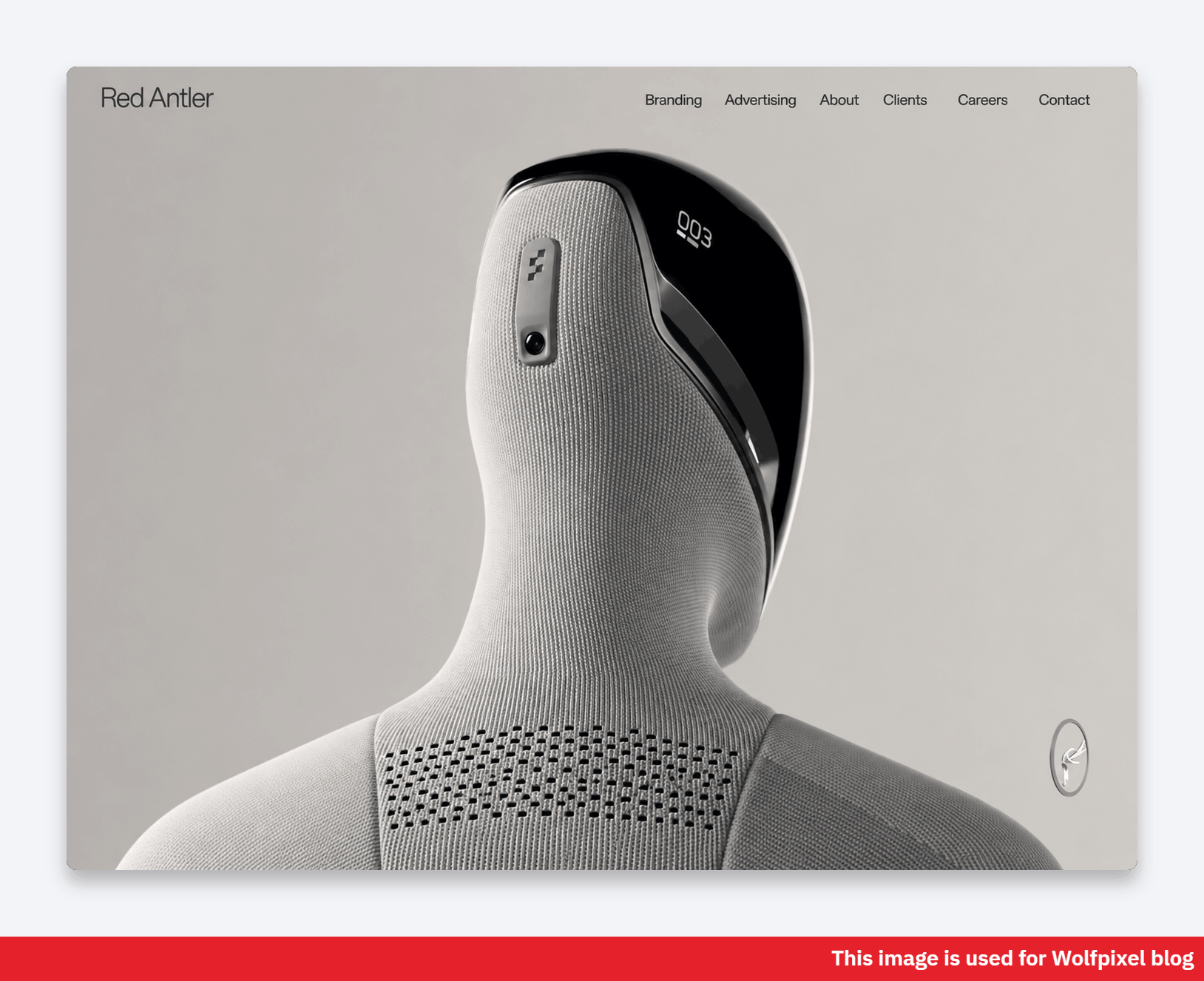
Red Antler is the agency many ambitious founders call when they are launching. They are very good at taking a company from an idea to a fully realized, market-ready brand with cultural resonance, pairing strategy with launch-ready design and positioning. If your goal is to make a strong first impression fast, they are a top pick.
Services: Brand strategy, identity design, naming, packaging, web design, launch strategy.
Strengths: startup and launch specialists who turn a concept into a brand quickly.
Where it falls short: built around the launch moment, so they are less suited to ongoing creative or enterprise governance, and the consumer and DTC lean fits some B2B categories better than others.
Best for: B2B and SaaS companies that need a strong identity plus internal buy-in.
Based in: Savannah, Georgia, working remotely. Founded in 2010.
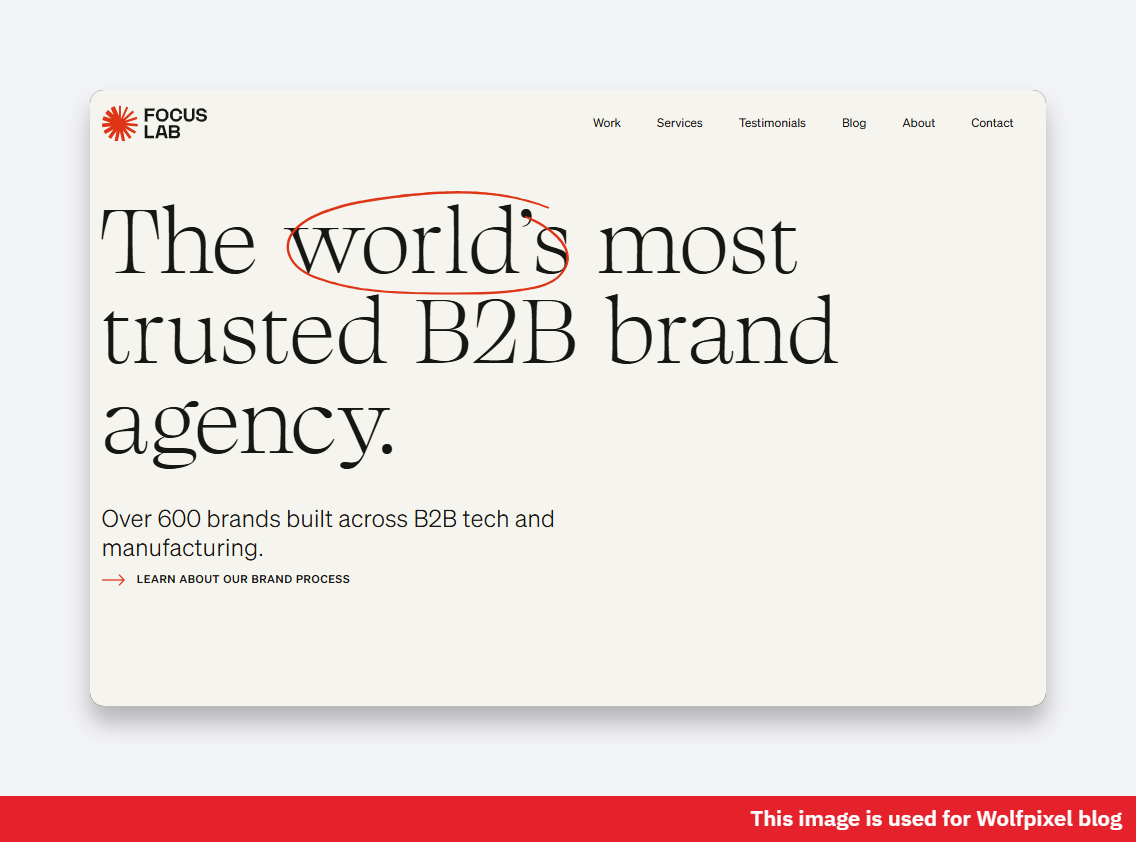
Focus Lab has become a go-to for B2B and SaaS rebrands, especially the kind that need the whole team to rally behind the new direction. They pair strong visual identity with a process built to align stakeholders, which matters when you are branding something technical and complex. Software companies moving into a new stage tend to like the structure they bring.
Services: Brand strategy, identity design, visual systems, brand guidelines, web design.
Strengths: deep B2B and SaaS focus, with a process designed for internal alignment.
Where it falls short: the thorough, alignment-heavy process takes time and budget, and consumer or culturally expressive brands may find the approach more measured than they want.
Best for: enterprises that need a high volume of ongoing brand and creative work, not a one-time founding identity.
Based in: fully remote and global. Founded in 2015.
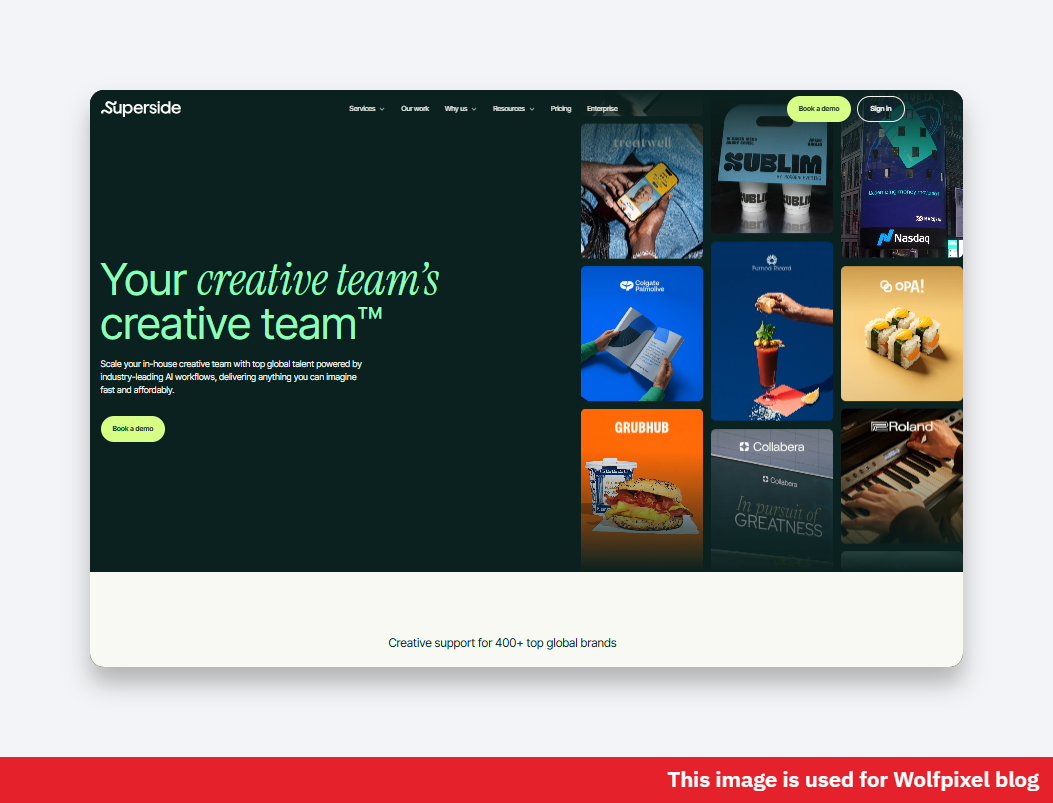
Superside is a modern creative service that delivers brand and design work at scale through a subscription model, backed by senior talent and AI-assisted workflows. With hundreds of creatives across dozens of countries, it functions like an on-demand in-house team. Subscriptions start around ten thousand dollars a month, which tells you the fit: it is built for organizations producing a constant stream of creative, less so for a single brand build.
Services: Brand design, creative at scale, ad creative, presentations, motion, design ops.
Strengths: consistent brand execution at volume, a strong alternative to a traditional retainer.
Where it falls short: the subscription floor is steep for a one-time identity, and a high-throughput model is not the place to expect the deep, bespoke strategic authorship of a founding brand build.
Best for: brands that want expressive, story-driven identity with cultural ambition.
Based in: New York and San Francisco. Founded in 2008.
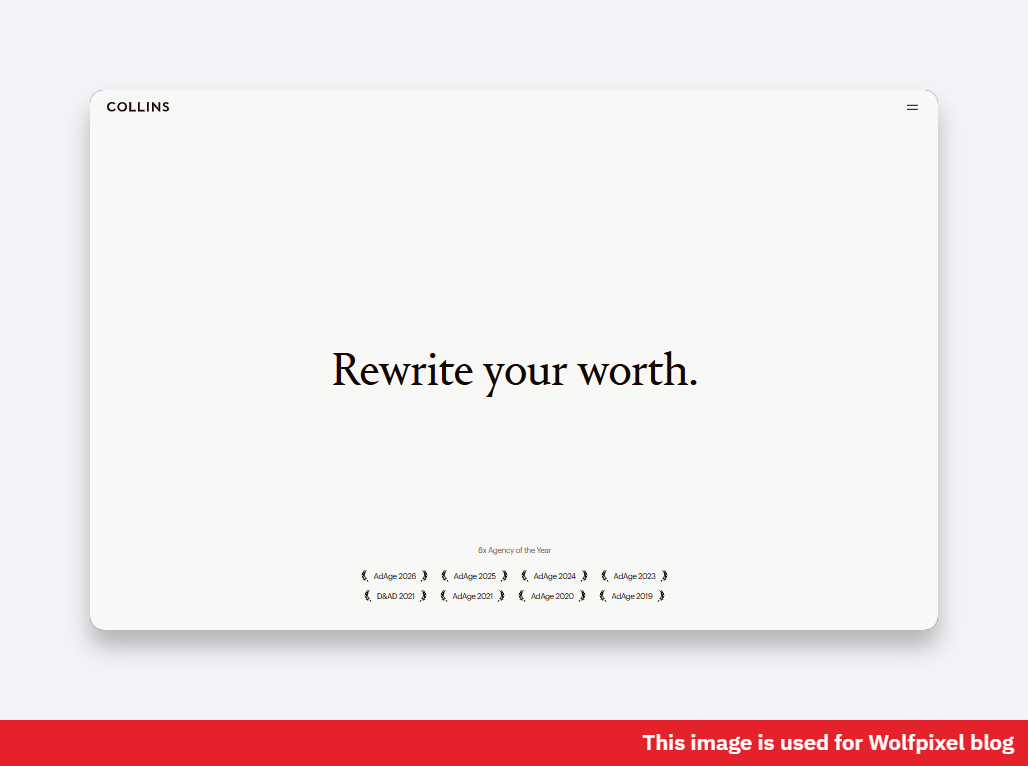
Collins is an independent studio celebrated for storytelling-led identity work. Their projects tend to be bold and distinctive, built around a strong narrative rather than a safe visual system, which suits brands that want to feel culturally relevant and unafraid. It is award-winning, expressive work for companies willing to make a statement.
Services: Brand strategy, identity design, brand expression, naming, motion, digital.
Strengths: creative edge and cultural relevance, branding with a point of view.
Where it falls short: the bold, expressive output can be a stretch for conservative or regulated brands, and ambitious creative at this level comes with premium pricing and longer timelines.
Most branding regrets come from a few avoidable mistakes. Watch for these before you commit.
You are buying a logo, not a system. A logo is decoration. What you actually need is positioning, voice, and a flexible visual system that holds together everywhere your brand shows up. If a proposal stops at "logo plus a one-page guideline," you will be left to do the hard part yourself.
The firm does not fit the job. A global identity house will over-scope a startup, and a tiny studio will under-serve an enterprise transformation. Be honest about your need, then match the firm's model and budget to it.
Nobody talks about how the brand performs digitally. A beautiful identity that breaks on mobile, loads slowly, or has no presence in search and AI answers is not doing its job. In 2026 brand and digital experience are the same conversation.
Strategy gets cut to save money. Design without strategy is just decoration. The positioning work is what makes the visuals mean something. Cutting it usually produces a pretty brand that says nothing, and a redo within two years.
Get a complete brand identity and website designed by senior creatives with transparent, fixed pricing.
A few shifts are changing how good brands get built this year, and they are worth keeping in mind while you choose a partner.
Distinctiveness beats polish. Now that AI makes clean design cheap, a genuine point of view is what makes a brand memorable and ownable. Anyone can look tidy. Few look unmistakable.
Brands form inside AI answers. Buyers increasingly learn who you are from an AI assistant summarizing you. A clear, consistent, well-structured brand shapes how those answers describe you, which means brand clarity is now a discovery advantage.
Systems have to flex. Motion, interactivity, and endless formats mean static guidelines are not enough. The strongest brand systems are built to move across channels without falling apart.
Strategy is becoming measurable. More teams now test messaging resonance and recall, narrowing the old gap between branding and performance. Positioning is starting to be backed by data, not just workshops.
Start by naming the job honestly. Is this a first identity, a rebrand, an enterprise transformation, or a steady stream of creative? Each one points to a different kind of firm on this list.
Once you know the job, three questions will tell you most of what you need to know about any agency.
Vague responses to any of those three are a reason to keep looking.
If you want a partner that covers all three, builds the system and the site, shows the work openly, and ships in days rather than months, that is the gap Wolfpixel was built to fill. You can browse our shipped identities before you ever book a call, then see a fixed price up front, with no discovery fee and no guesswork.




.svg)



.svg)

.svg)

.svg)

.svg)

.svg)
.svg)
