


16-09-2026
UI/UX
Build your best healthcare web design with these 11 examples.



Most founders start hunting for a B2B SaaS design agency for the same reason: the traffic looks fine, but the demos are not coming. That gap, between a site people visit and a site people buy from, is the whole reason this list exists. Software bought for a company is never an impulse, and your design either helps the buyer build a case for budget or quietly works against them.
The stakes keep climbing. The B2B SaaS market is projected to reach roughly $492 billion in 2026 and pass $1.5 trillion by 2031, according to Mordor Intelligence, which means more products, more noise, and less patience from buyers. Research from firms like Gartner shows B2B buyers spend most of their decision researching on their own, before they ever talk to sales. So the part of the funnel you cannot see is the part design has to win.
Here is the short answer first. The best B2B SaaS design agencies in 2026 are Clay, Ramotion, Wolfpixel, MetaLab, Eleken, Halo Lab, UX studio, Huemor, Pixelmatters, Netguru, and Superside. Every one specializes in software sold to businesses, so they design for long sales cycles, buying committees, dense dashboards, and the onboarding that decides whether a product sticks.
I run a product and SaaS design studio, so I did not rank these from a directory. I reviewed them the way a founder actually shops for a partner: by stage, by budget, and by proof.
A B2B SaaS design agency is a studio that designs the UX, UI, and brand for subscription software sold to other businesses, with the goal of moving activation, conversion, and retention rather than just looking modern. That narrow focus is the entire value. A generalist can ship a pretty homepage. A SaaS specialist designs for the messy reality behind it.
Founders who hire a generalist tend to hit the same three problems. First, designers who do not understand SaaS conversion logic, so the site looks good and converts poorly. Second, navigation and information architecture that confuse a buying committee instead of guiding it. Third, onboarding flows that push time to value further away, which quietly feeds churn.
A SaaS focused team designs around all three from day one, because the buyer, the admin, and the daily user are usually three different people with three different definitions of value.
I scored every agency on this list against six factors, the same ones I use when a founder asks me who to hire instead of us:
I want to be straight about one thing. Wolfpixel is my own agency, so read my entry as a founder being transparent, not as a neutral referee. The other ten are studios I have followed, competed with, and in several cases admired for years. Where I name a client or a result, it is publicly documented work, not a number I invented to fill a table.
Uncover the UX and conversion gaps holding your SaaS back and find out what to fix next.


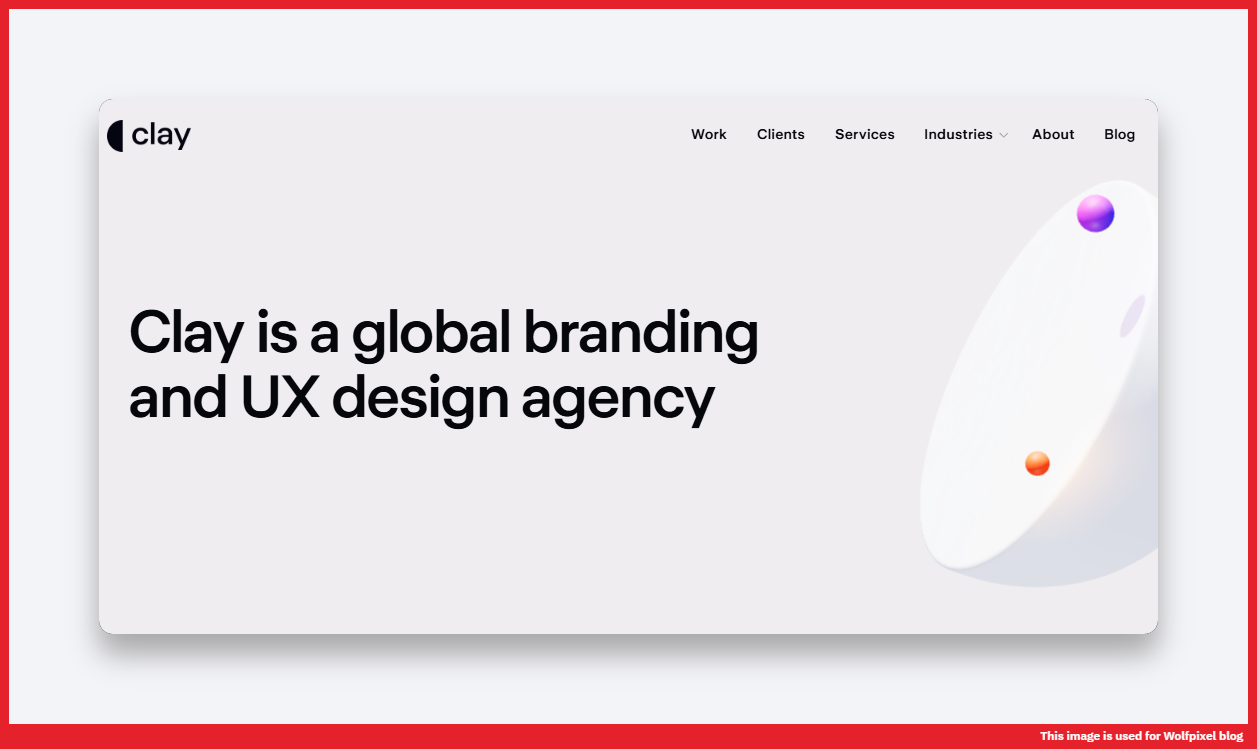
Clay is where sleek visuals meet serious brand strategy, and few teams execute at their level. Working with clients like Sony, Coca-Cola, and Toyota, they have built a reputation for blending branding and UX into experiences people remember, with typography, motion, and the small details all landing. They are a strong fit when your product needs to feel premium and you have the budget to match.
Where they stop short is predictable: that polish carries a premium price, and the work leans more toward brand led experiences than deep, behavior first product research.
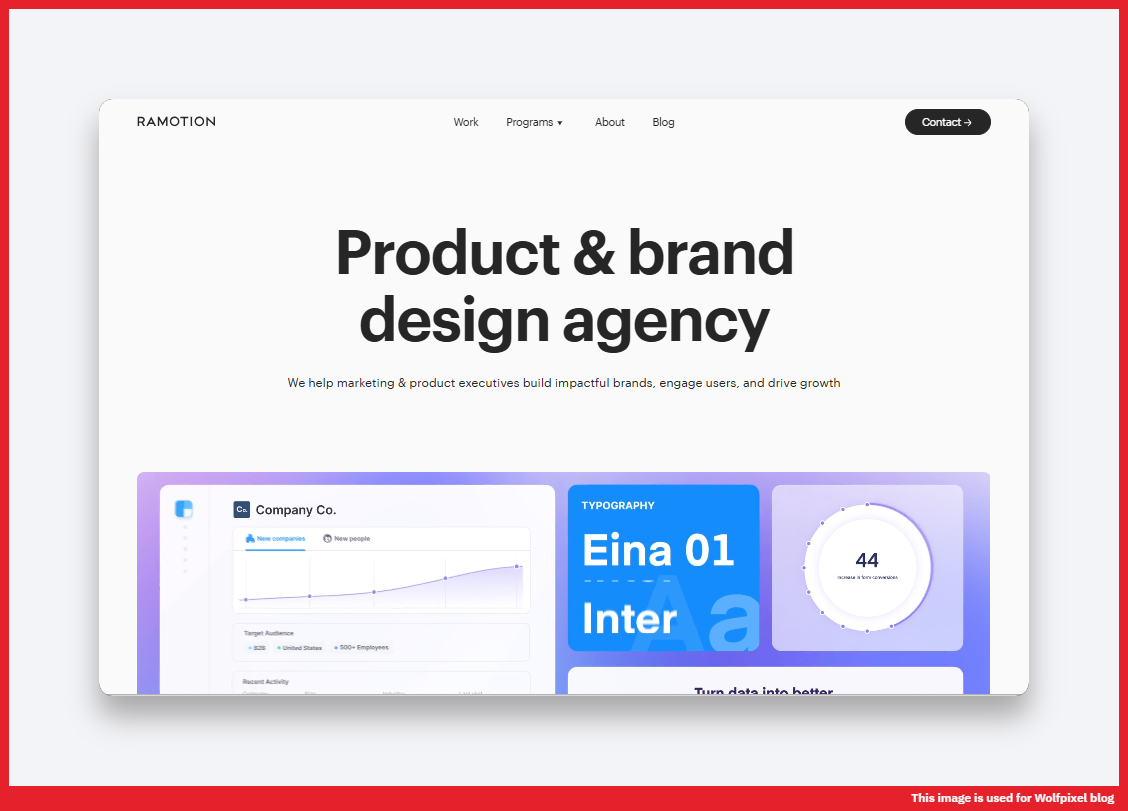
Ramotion treats brand identity and product UI as one continuous system, which is why their work feels so cohesive. They are known for brand level work at the scale of the Firefox identity and for design systems that hold up across many product lines, with clients including Mozilla, Salesforce, Stripe, and Xero. They are the call when you want your brand and your product to read as one thing, not two.
The catch is that full cycle scope can stretch timelines past what a narrower studio would need.
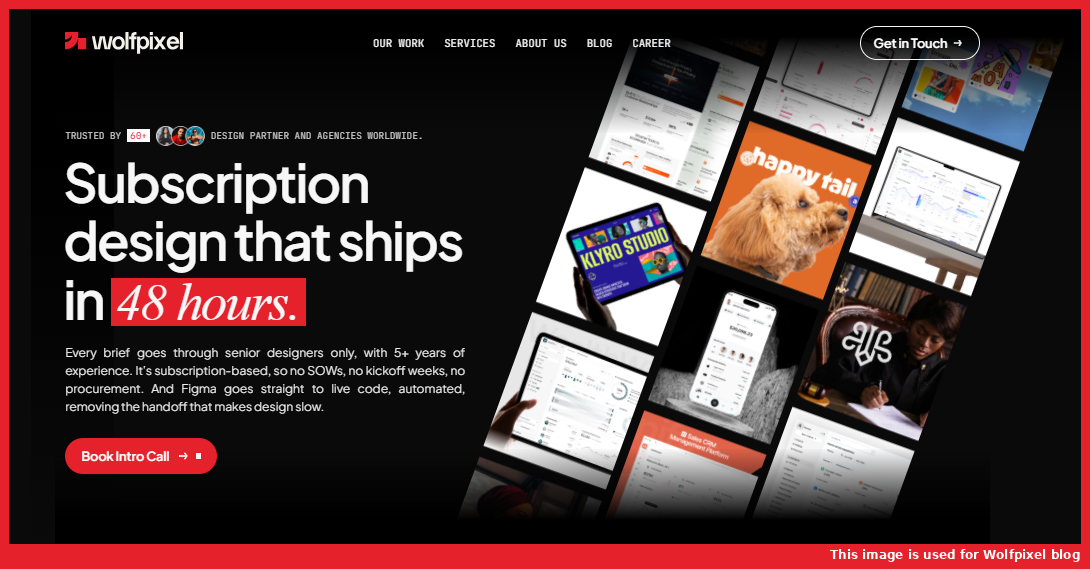
Wolfpixel is a SaaS only studio founded in 2022, built around one promise. Every brief lands on a senior designer with five or more years of experience, with no junior cycles and no review queues. Between 2022 and 2026 the team earned 25 plus design badges and 10 plus awards across fintech, healthtech, forex, and AI products.
Here is the inside view, since this is my team. Most founders who reach us are not missing visuals. They are losing users between signup and first value and cannot see where. On our free thirty minute strategic call we audit the brief live, and the real leak is usually onboarding, not the homepage. You can see that work in our ZapMail, Crimino, and Zyntra case studies.
The honest trade off is that we are younger and leaner than the enterprise shops on this list, and we are built for B2B SaaS, so we are not the pick for a consumer or e commerce brand.
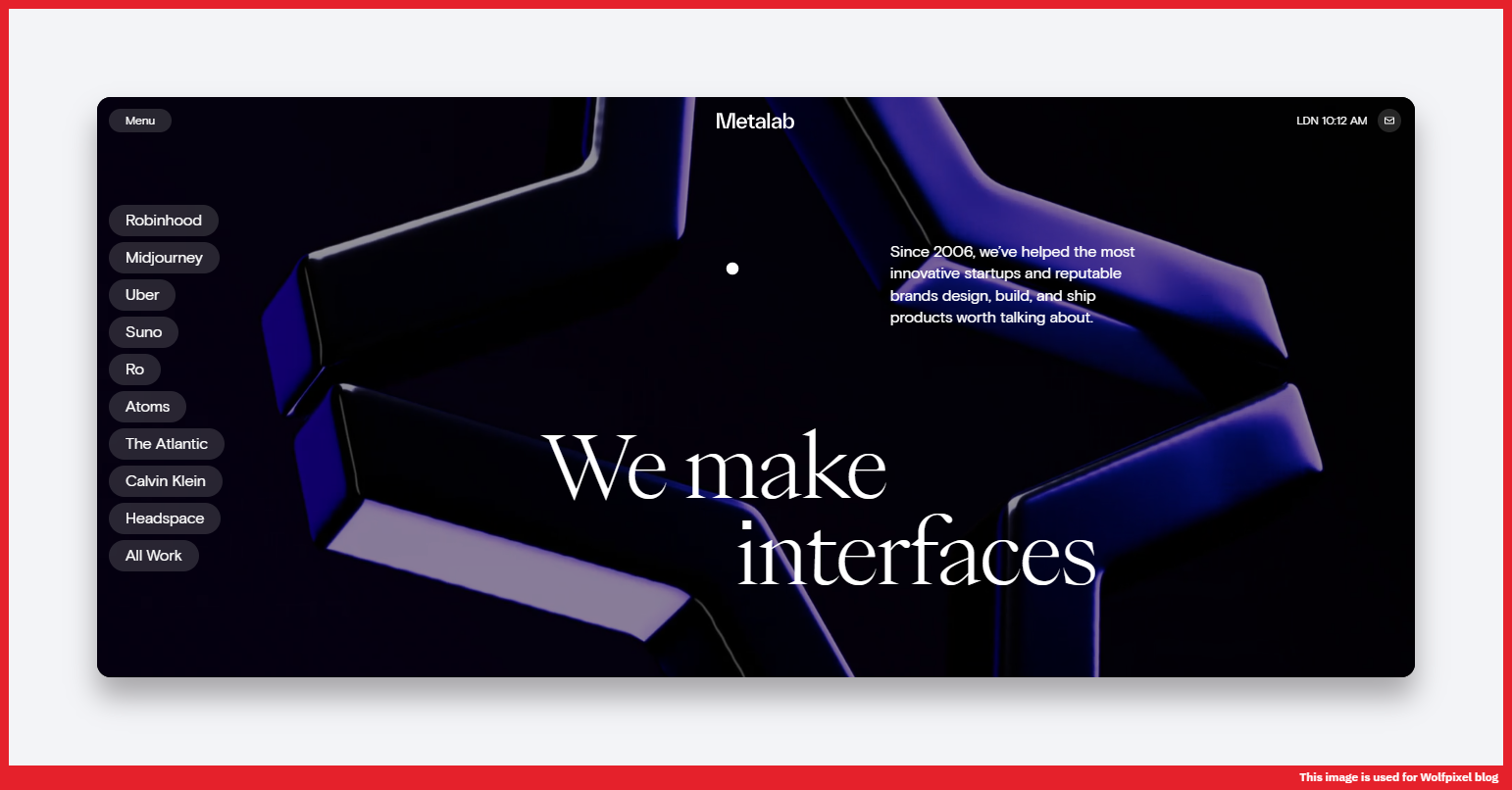
MetaLab helped shape Slack's original product experience, and that pedigree still defines the work. Their real strength is taking advanced workflows, dashboards, and dense logic and making them feel obvious, without dumbing anything down. With clients like Slack, Loom, and Coinbase, they are the team you call when a product is powerful but hard to use.
One caveat: they are premium and built for deep product work, so a quick marketing page is far more firepower than the job needs.
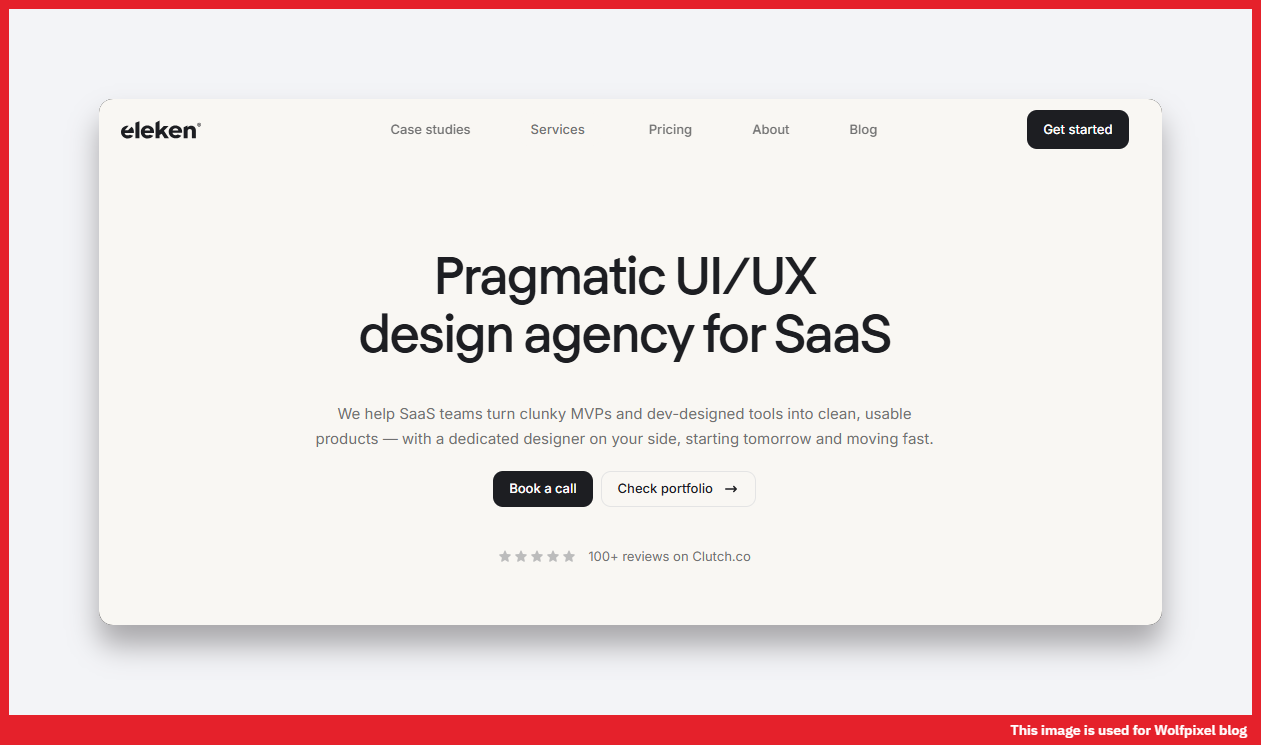
Eleken works only with SaaS companies and has designed more than 200 SaaS products since 2015. Instead of a project and a project manager, you get a dedicated designer who embeds in your Slack and Figma and works like part of the team, and they even offer a short free trial so you can test fit first. With clients like Solvvy, Gridle, and Citify, they are a clean fit for product teams that already have engineers.
Worth knowing up front: they are design only, so your team owns the build.
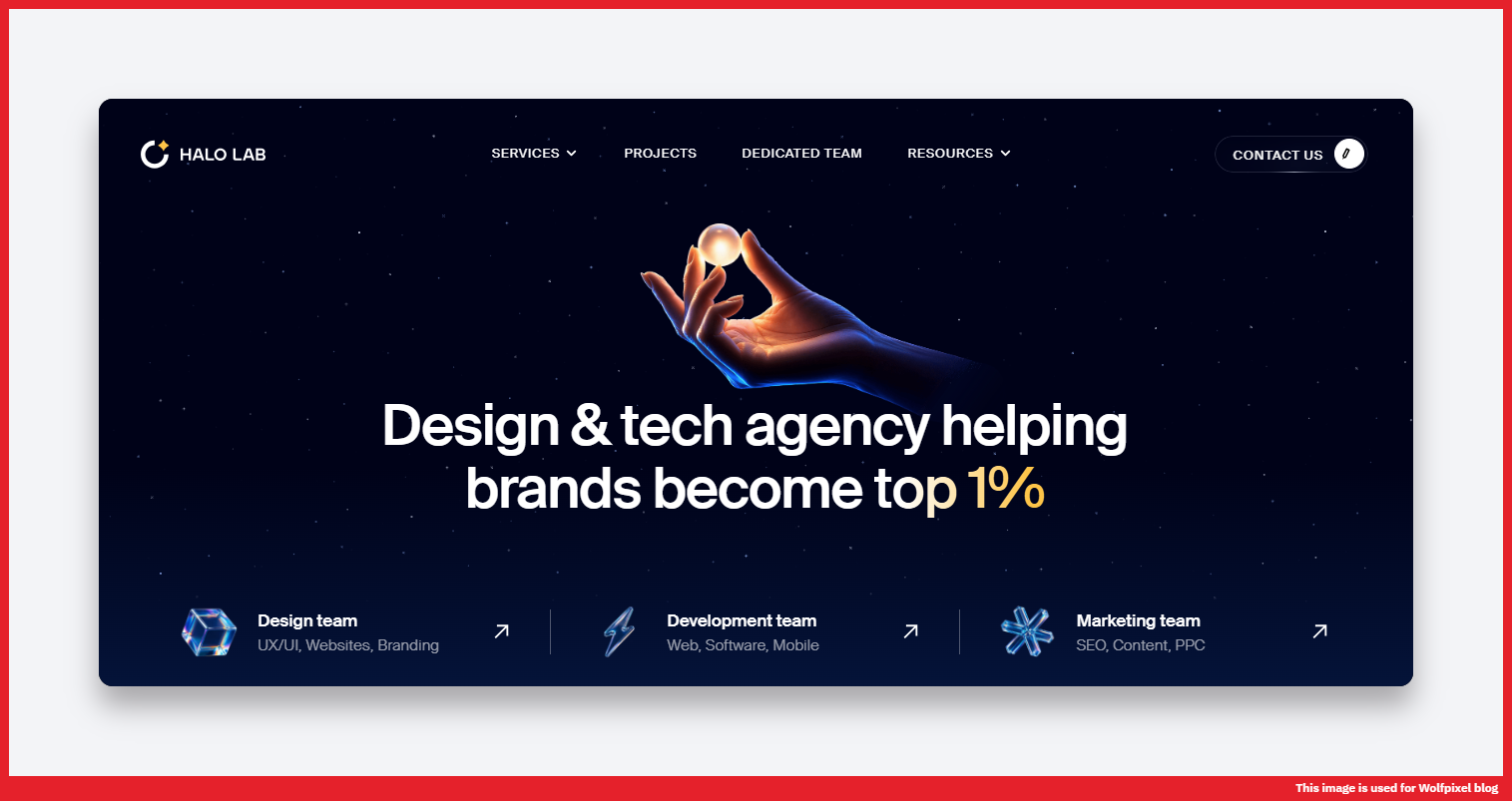
Halo Lab has shipped more than 500 projects across SaaS, AI, fintech, and healthcare since 2013, and the portfolio is known for pairing strong visuals with real business performance. They bring strategy, creativity, and execution together, with clients like WorkVivo and PrimeXConnect, which makes them a fit for growth stage teams that want work that looks sharp and still moves the numbers.
The flip side is that the craft bar is high, so come with a real design budget.
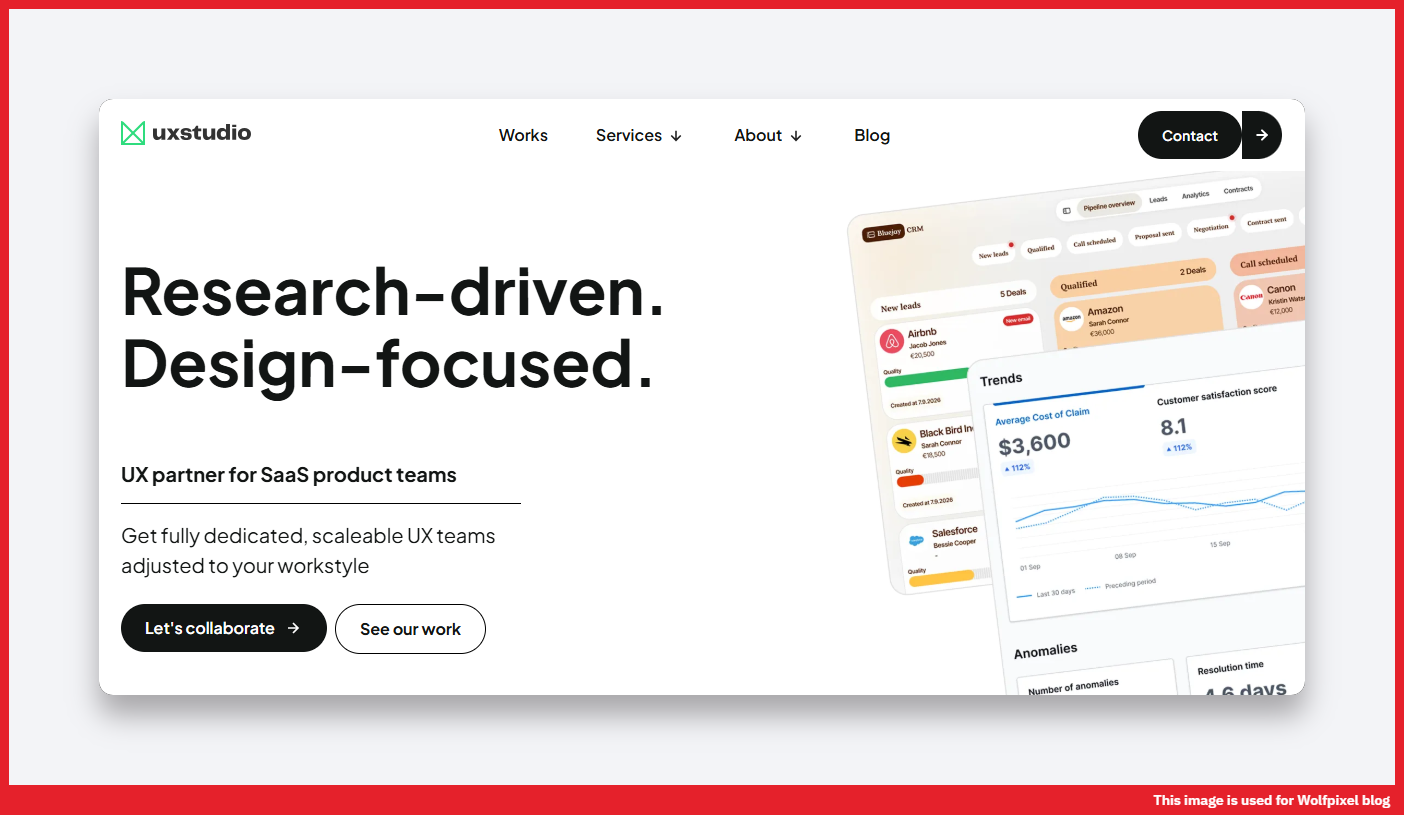
UX studio is built around research, usability testing, and data backed decisions rather than guesswork. If your product has users but activation or retention is leaking, this is the team that digs in to find the why before touching the design, with experience across clients like Lufthansa, Deutsche Telekom, and Babbel. Bring them in when you want decisions validated by real users, not opinions in a meeting.
The cost of that rigor is speed: a research first process is not the fastest route to launch.
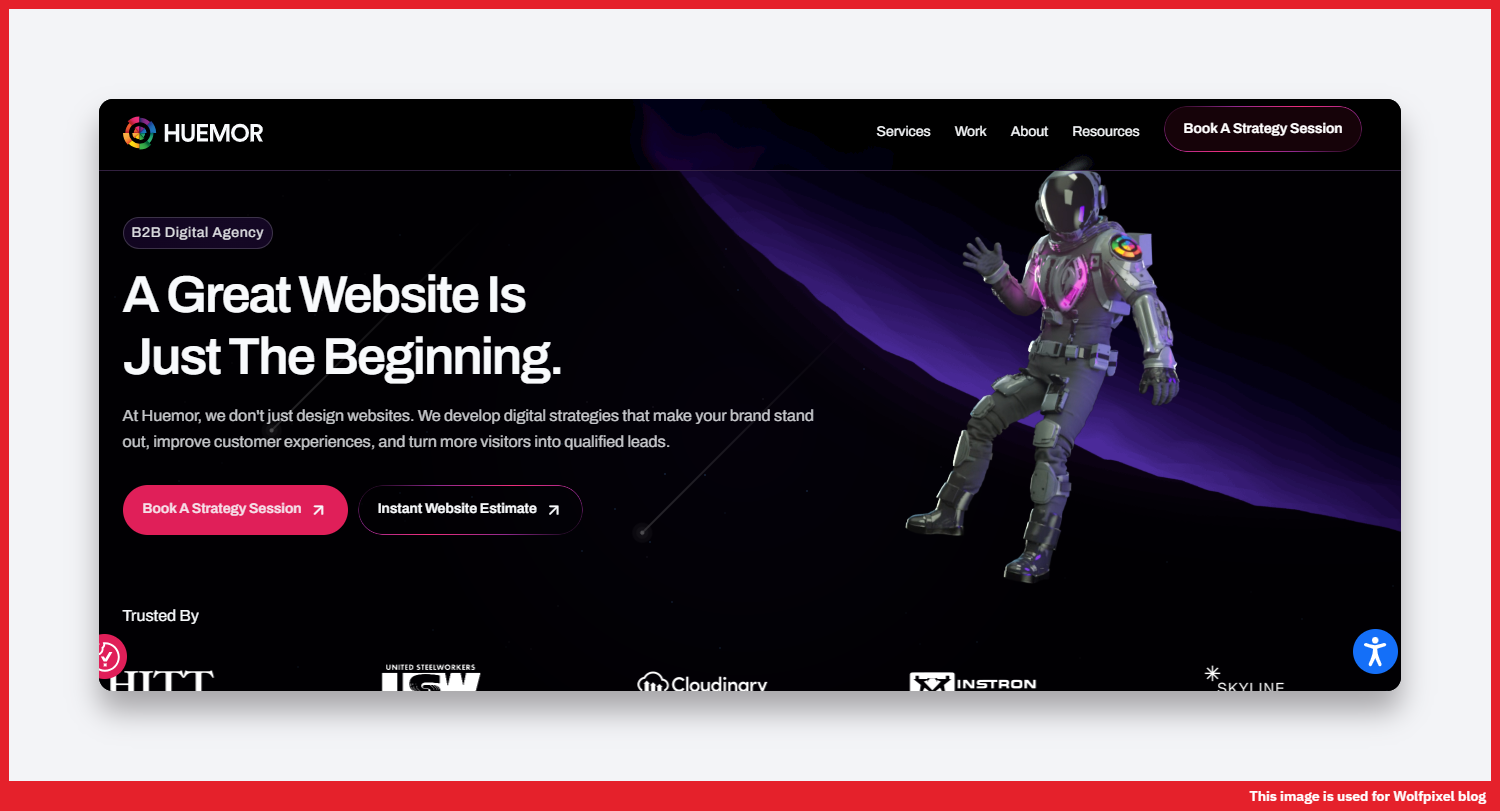
Huemor builds memorable, conversion driven sites in a market where most SaaS pages look like the same Stripe clone. They lean into custom illustration, interactive product tours, and a distinct voice, with clients like BetterCloud and Boston Dynamics. They fit best when your marketing site is the main conversion asset and sameness is the enemy.
Just know their strength is the marketing site itself, not deep in product UX.
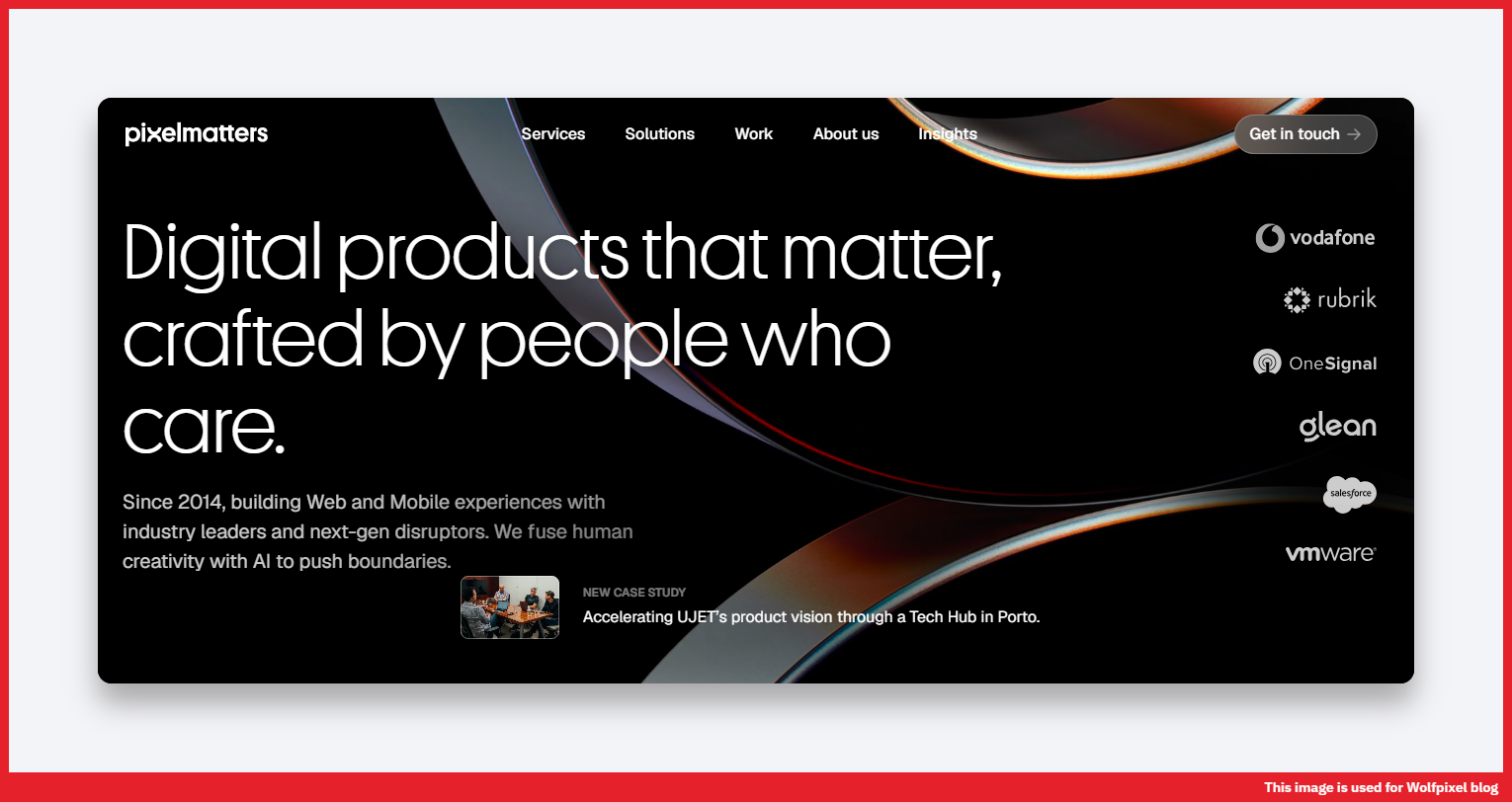
Pixelmatters pairs product design with front end engineering, which removes a lot of the handoff friction that slows SaaS builds. That combination suits scaling SaaS and tech companies across Europe and the US that want design and build moving in step rather than across two vendors. Reach for them when you want one team owning both layers.
Their value narrows at the small end, though: the payoff comes on larger, end to end engagements rather than tiny one off scopes.
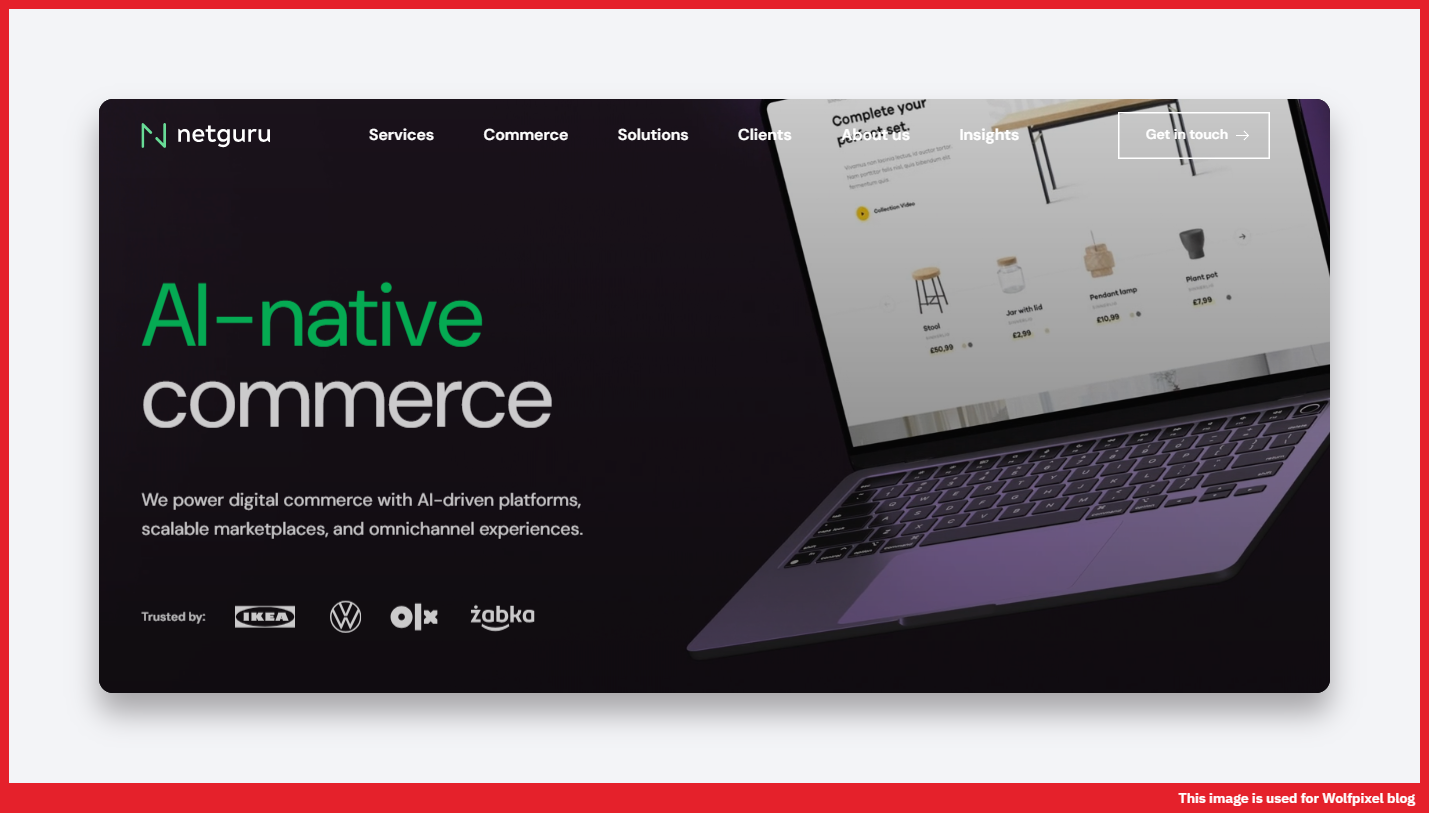
Netguru is a large company offering product design alongside full software development, which matters when scope gets serious. For enterprise SaaS, keeping design and engineering capacity under one roof keeps a complex roadmap on schedule, and the client list includes enterprise names like Volkswagen, IKEA, and OLX. They earn their place on enterprise scale builds where you want both layers in one partner.
The downside of that size is weight: the machine can feel heavy, so a small startup may be happier with a leaner studio.
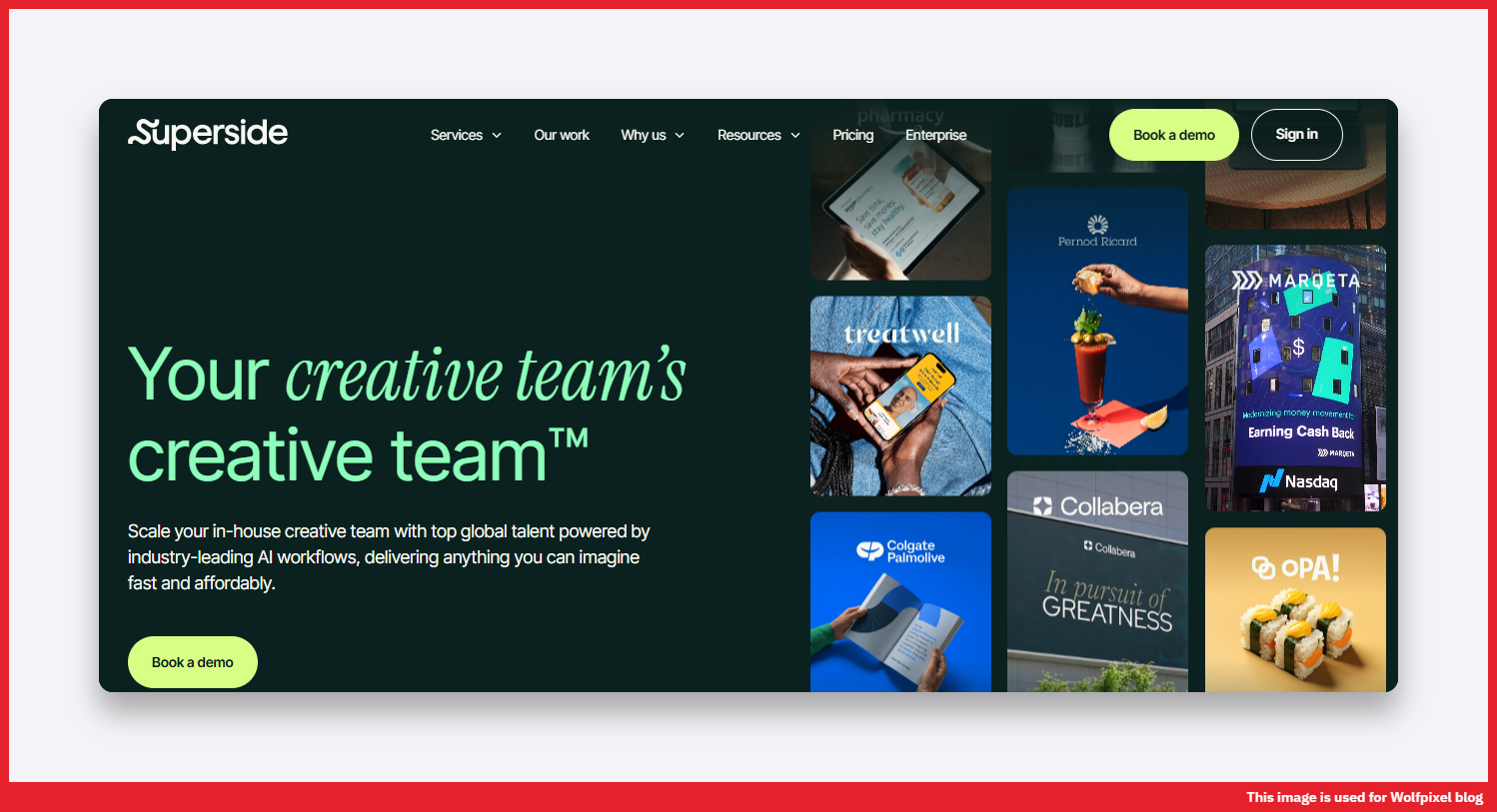
Superside runs a subscription creative model with AI assisted workflows and turnaround measured in hours rather than weeks. For SaaS growth teams testing many ad and landing variations every week, that speed is the whole point, and clients like Amazon, Shopify, and Salesforce show the scale they can handle. They are the answer when a growth team needs constant marketing creative at volume.
Know the boundary, though: this is marketing design, not core product architecture, so do not hand them your dashboard.
The thread that connects every trend this year is the same one running through this guide. Design is now about helping buyers and users move faster, not about looking impressive.
Product led onboarding is becoming the default, because the fastest way to win a buyer is to let them reach value before a sales call. Conversion focused marketing sites keep replacing brochure sites, since the homepage has to book the demo on its own.
Scalable design systems are no longer optional, because they keep the experience consistent as a product grows and they cut engineering effort. AI assisted personalization is starting to shape dashboards and flows around real user behavior, and a few agencies are already designing for AI agents that act on a user's behalf.
Accessibility has moved from nice to have to expected, especially for enterprise SaaS where compliance is part of the buying checklist. The studios on this list build with these principles by default, which is a big part of why their work keeps converting.
Start by being honest about your stage, because that single answer narrows the field fast. An early team needs speed, clarity, and an MVP that earns its first users. A scaling company needs a design system, retention thinking, and proof of conversion lift. An enterprise needs capacity, process, and people who understand compliance and buying committees.
Demand real SaaS proof. Ask to see actual product work, dashboards, onboarding flows, admin panels, not just marketing pages. Request three SaaS case studies with measurable outcomes before you sign anything.
Decide design only or full cycle. Design only studios like Eleken fit teams that already have engineers. Full cycle partners like Netguru and Pixelmatters fit teams that want design and development under one contract, with no handoff gap.
Pick the engagement model that fits. Subscriptions suit ongoing, evolving work. Fixed projects suit a defined one time scope like a redesign or a launch. A full service partner suits teams that need strategy, design, and build together.
Check portfolio depth, not polish. A studio with dozens of shipped SaaS projects carries far less execution risk than one with a handful. Polish is easy to fake on a single shot, depth is not.
Weigh communication as heavily as the portfolio. Ask who you will work with day to day, how often progress is shared, and how much working hour overlap you will have. Teams that operate as an extension of yours beat teams that hand over files and disappear.
B2B SaaS design pricing falls into three models, and knowing them protects your budget. Hourly rates usually run from about $50 to $200 per hour, which suits small, well defined tasks. Monthly subscriptions or retainers typically run from about $2,000 to $7,000 per month for ongoing output, which suits products in active growth. Fixed project pricing ranges from roughly $5,000 for a focused scope to $200,000 and up for full brand plus product systems, which suits one time launches and redesigns.
As a rough map by stage, an early MVP design project often lands between $6,000 and $35,000. A growth stage redesign or major feature expansion often runs $35,000 to $80,000. An enterprise scale redesign can pass $150,000.
The number matters less than the match. Paying for a heavy enterprise process when you need a fast landing page wastes money, and so does buying a cheap template when you are selling six figure contracts.
Uncover the UX and conversion gaps holding your SaaS back and find out what to fix next.
Yes, hiring a B2B SaaS design agency is worth it when growth is the priority, because the right partner turns design into a revenue lever rather than a cost. A strong team can lift demo bookings, improve activation, reduce churn, and shorten sales cycles, which are the exact numbers that decide whether a SaaS company scales or stalls.
The wrong team hands you beautiful mockups your developers cannot build and your users cannot navigate, so the choice matters as much as the decision to hire at all.
In 2026, B2B SaaS companies do not win by shipping more features. They win by communicating value faster and clearer, and design is how that happens.
Any of the eleven agencies above can help you do that, so match the pick to your stage, ask for proof, and choose the team that treats your numbers as the point.
If you want a second set of eyes before you commit, book a free thirty minute strategic call with our team. We will audit your brief live, show you the cases closest to your problem, and tell you honestly whether we are the right fit or point you to someone who is.




.svg)



.svg)

.svg)

.svg)

.svg)

.svg)
.svg)
