




16-09-2026
UI/UX
Build your best healthcare web design with these 11 examples.


Looking for a SaaS web design agency? The right team turns your product’s value into a clear path to a trial, a demo, or a signup. Updated June 2026. We compared the SaaS-focused agencies that rank for this search alongside ones we have worked near, and these nine made the cut. We run a SaaS design agency ourselves, so read this as a competitor’s honest scorecard: we will tell you where each name beats us, and where we would send you to them instead of us.
If you're a founder or growth lead choosing who designs the front door to your product, this is for you. Let's get into it.
A SaaS web design agency is a design studio that builds marketing websites, landing pages, and product interfaces specifically for software-as-a-service companies. The keyword there is specifically. A SaaS design agency understands things a generalist usually doesn't free-trial funnels, demo bookings, onboarding flows, pricing-page psychology, and the long, multi-stakeholder B2B sales cycle that turns a curious visitor into a paying account.
That focus matters because a SaaS website has a harder job than a normal one. It has to explain an abstract product in eight seconds, build enough trust to hand over a credit card or book a call, and keep working as you ship new features every month. A generalist can make that look pretty. A SaaS specialist makes it convert.
A great SaaS website design agency turns your product's value into a clear, compelling experience that earns trust and drives growth. After years of doing this work and watching other teams do it, here's what separates the great ones from the merely good.
The best teams understand how B2B SaaS companies actually sell. It's not about flashy animation, it's about trust, clarity, and fast load times. They know your site supports your product, your marketing, and your support team all at once. A SaaS site isn't branding; it's part of the business.
In SaaS, a landing page isn't optional, it's the engine. Whether you're pushing a free trial or launching a feature, the design has to speak clearly: where the CTA lives, how to simplify choices, how to turn interest into action. Good agencies obsess over this.
Your platform probably connects to tools like HubSpot, Stripe, or Zapier. A skilled agency designs with your tech stack in mind, not in a vacuum. It saves time and avoids painful rework later.
Great design helps people use your product. A smart agency designs with your users in mind instead of dropping you into a recycled template. For SaaS, better UX means fewer support tickets and higher retention, the same principle we apply in product-heavy work like healthcare UI/UX design.
You don't have six months to launch a page. Good SaaS agencies match the pace of fast-moving software teams and ship quickly on platforms like Webflow, without sacrificing quality.
SaaS web design is not the same job as a traditional brochure website. A traditional site introduces a company; a SaaS site has to convert a trial, explain a live product, and connect to tools like HubSpot, Stripe, and your CRM. Traditional sites ship once and sit still, while a SaaS site is a product surface that keeps changing with pricing, onboarding, and new features. That is why product-led growth teams treat the website as part of the product, not as marketing decoration.
Here's how they actually differ:
Here are the seven agencies I'd actually recommend, with real details so you can verify everything yourself. I've put us first because I know our work best — but I've described the others with the same honesty.
B2B SaaS only · Clutch 5.0 · 5 reviews (young profile) · $75–125/hr
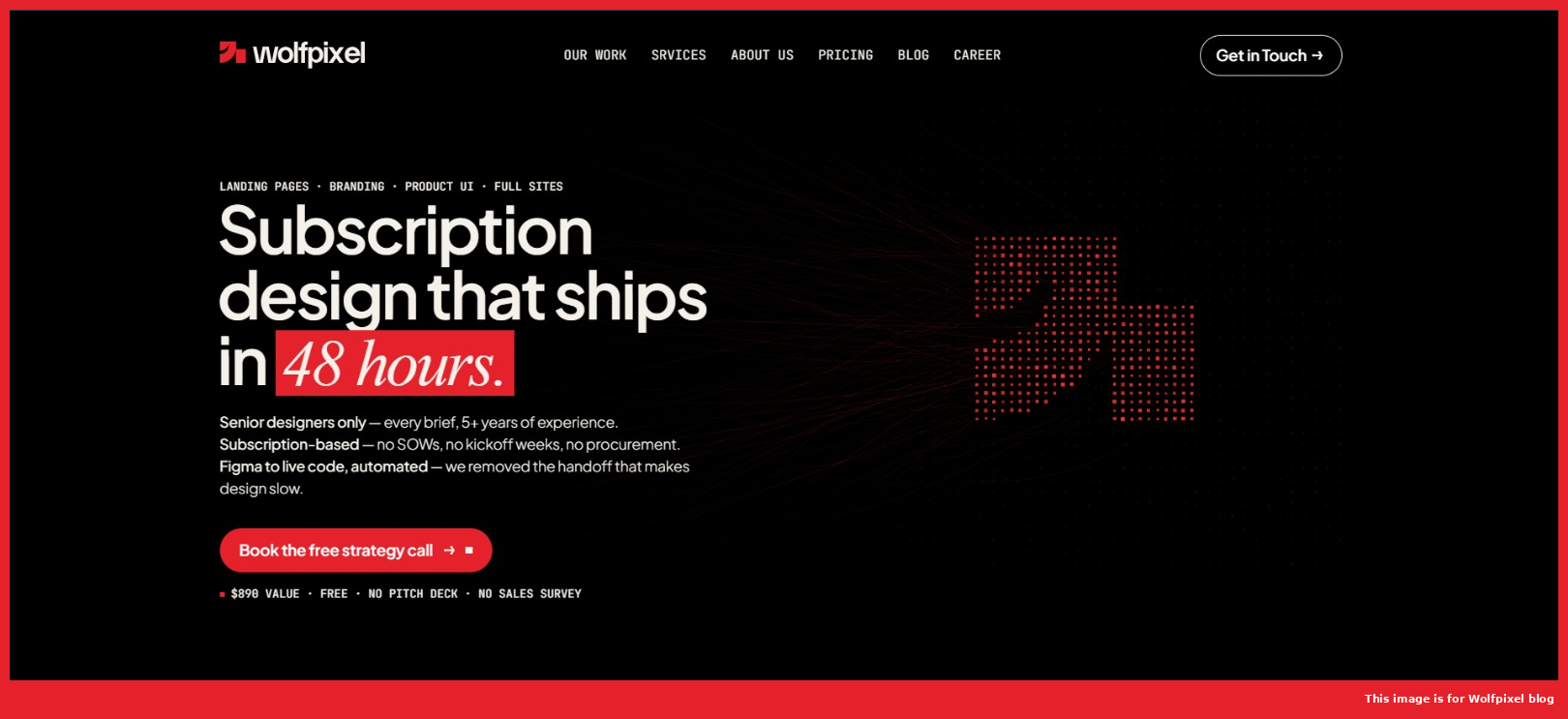
The obvious thing first: we wrote this article, and we gave ourselves the number-one spot. Oldest move on the internet. Raise an eyebrow, we would.
So let's be straight. Clay and Ramotion have a decade of work and household-name clients. We have a young Clutch profile and a 5.0 from five reviews, and five reviews is not a track record. The top slot is the home-team advantage of holding the pen, nothing more.
What we'll earn is the rest of this page. We tell you honestly where each agency below beats us and where we'd send you to them instead. An agency willing to do that on its own list is the kind worth talking to.
We work only in B2B SaaS, UI, UX, branding, and product design at roughly $75 to $125 an hour. Senior design without the top-tier $150 to $300 rates, and a long way from the offshore-template economy. The people on your account are named in the contract. We start with a small paid pilot so you can judge us on one real project before any retainer.
If you're a Fortune 500 rebranding globally, send the work to Clay or Ramotion. We'll say so plainly.
For a funded startup that wants a straight-talking partner who won't vanish behind an account manager — that's the bet we make.
Verified proof of work: We designed for Asendia AI, a Y Combinator–backed B2B SaaS recruitment platform that screens thousands of candidates a day for staffing and enterprise teams. It's the kind of complex, workflow-heavy product where design has to make a multi-step AI pipeline feel simple, exactly the SaaS challenge we specialise in. You can see the live product at asendia.ai.
San Francisco · Clutch · 32 reviews · Client: Slack, Coinbase
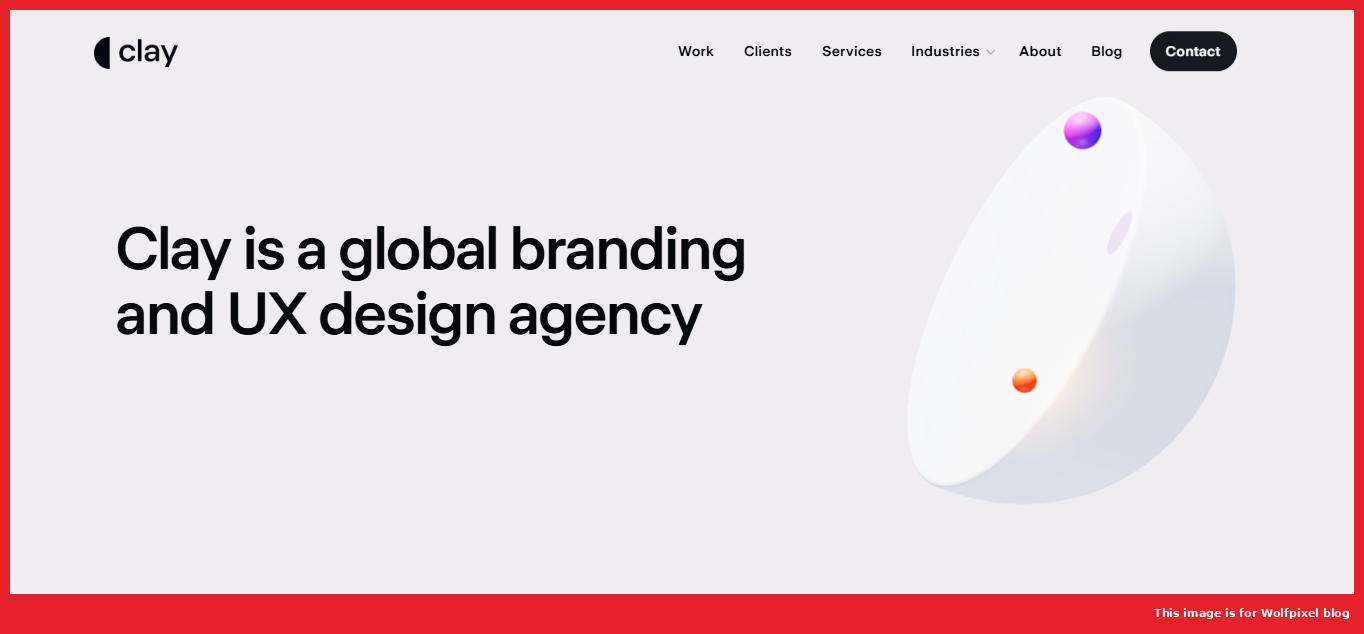
Clay, a San Francisco UX and branding agency with over a decade of work, designs enterprise-grade SaaS interfaces for clients including Slack, Coinbase, Amazon, Google, and Sony. Clay projects typically run $20,000 to $150,000 at $150 to $199 an hour. Its client list reaches past software into Coca-Cola, Snapchat, and Cisco, so it works as much like a brand studio as a product one. Pick Clay when you are an enterprise SaaS platform that needs polished, large-scale UX and can fund it. Clay is elite and priced for the enterprise, which makes it overkill for an early-stage startup and an excellent fit once you are at scale.
Founded 2009 · San Francisco · Clutch · 29 reviews · Client: Salesforce, Okta
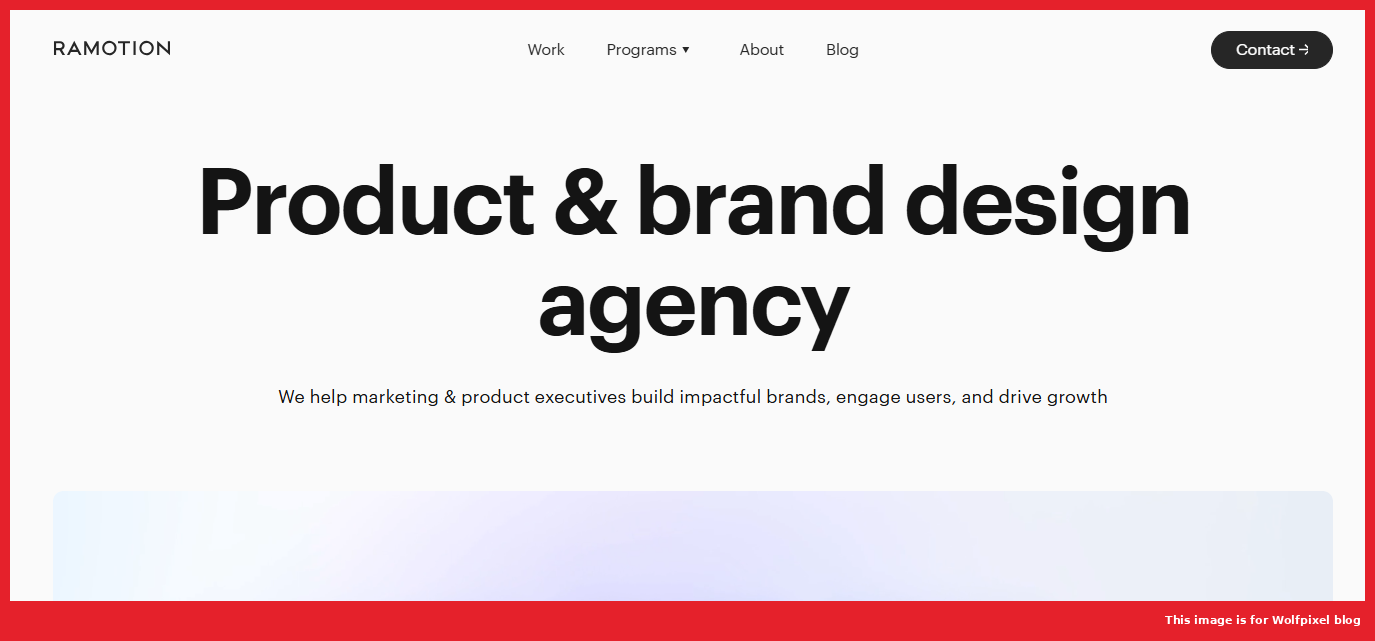
Ramotion, founded in 2009 in San Francisco, builds brand identity and product design for B2B SaaS, crafted Stripe’s iconography, and counts Salesforce, Okta, and Mozilla among its clients. A $50,000 project minimum at $150 to $199 an hour puts Ramotion in premium, funded-startup territory. Beyond Stripe’s iconography, Ramotion also shaped Firefox’s identity system. Pick Ramotion when your brand and your product need to feel like one system. It is premium work built for funded teams, so weigh it against your stage before you commit.
Founded 2008 · San Diego · Clutch · 121 reviews
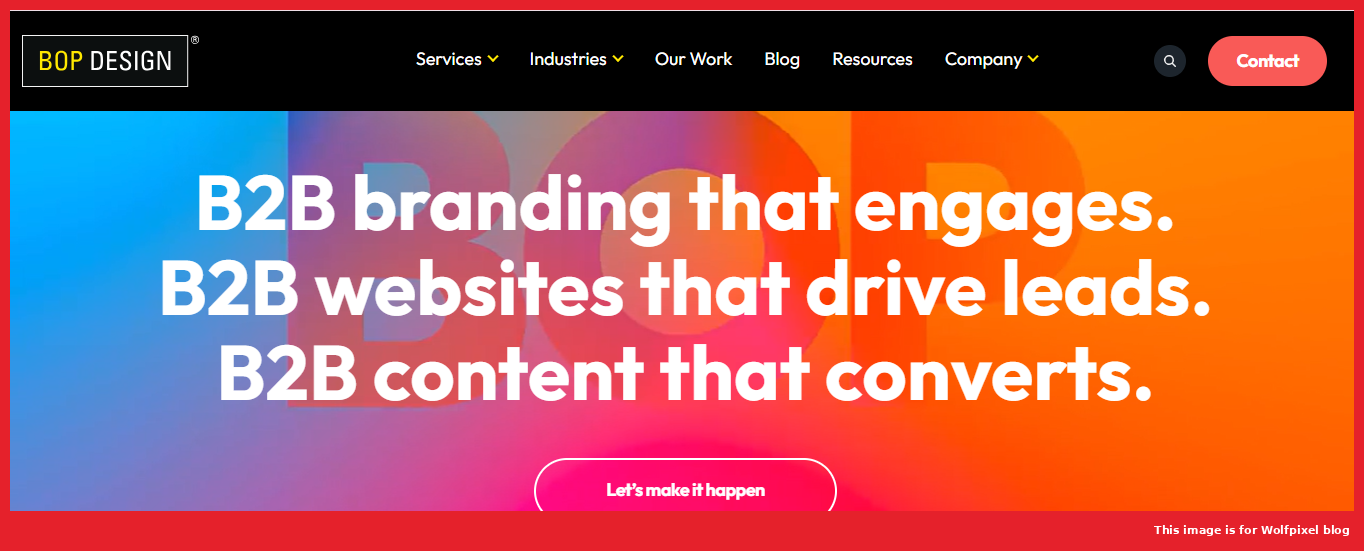
Bop Design, a woman-owned B2B agency founded in 2008 in San Diego, focuses on technology, SaaS, and finance, and is a 2026 Clutch Global award winner. Bop Design projects start around $25,000 at $150 to $199 an hour, typically running $10,000 to $145,000. It pairs web design with B2B content and SEO under one roof, aimed at technology and finance firms. Pick Bop Design when you want a small senior team handling design and B2B messaging together.
Founded 2011 · Pittsburgh · Clutch · 72 reviews · Client: BetterCloud
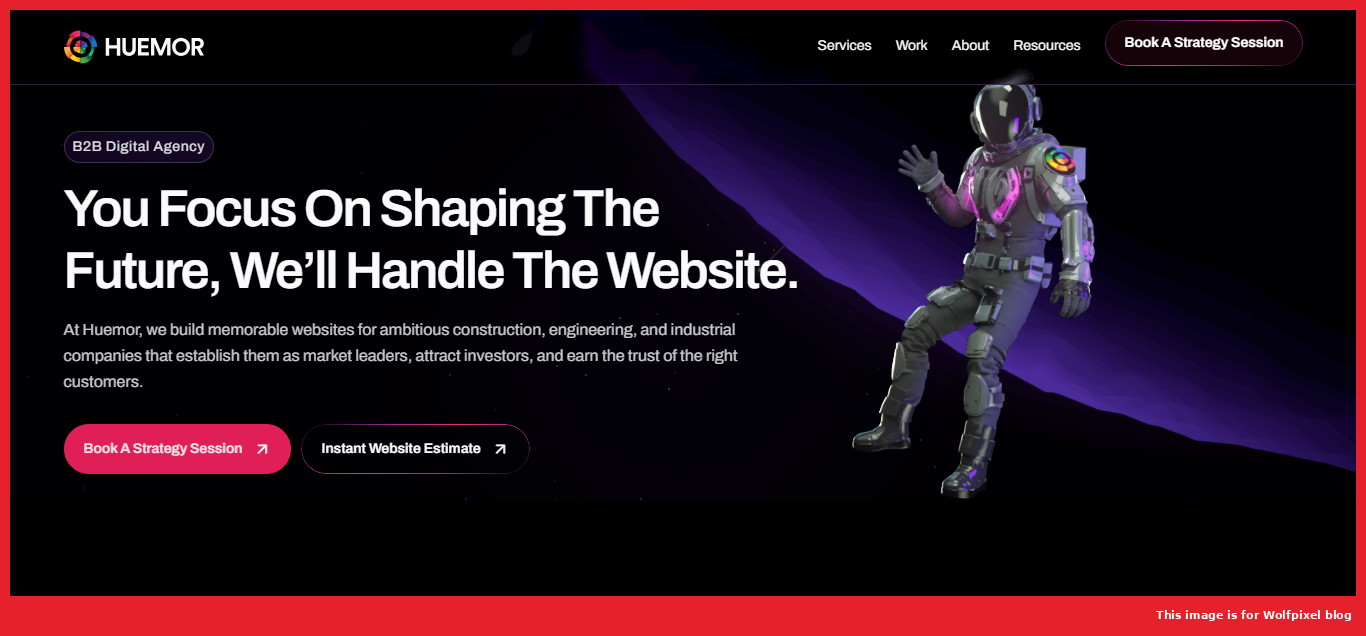
Huemor, founded in 2011 in Pittsburgh, designs conversion-focused SaaS marketing sites and reports results such as a 50% lift in demo signups for BetterCloud. Huemor projects start around $25,000 at roughly $150 to $199 an hour. Clutch named Huemor a top U.S. web design company for 2024, and it is known for bold, conversion-first design over safe templates. Pick Huemor when your marketing site is your main conversion asset.
Founded 2015 · San Francisco · Webflow Enterprise Partner
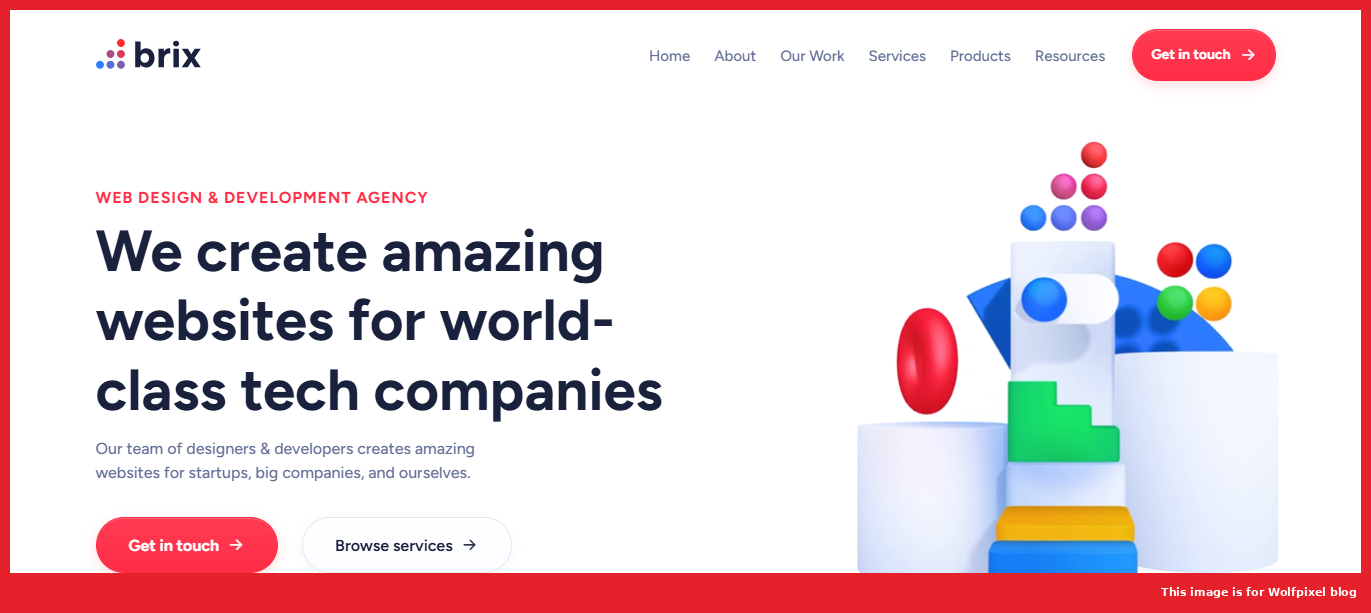
BRIX Agency, founded in 2015 in San Francisco, is a Webflow Enterprise Partner with more than 100 Webflow projects and built-in integrations for HubSpot, Salesforce, and Slack. BRIX Webflow projects start around $10,000. BRIX has published more than 150 Webflow templates that thousands of teams build on, putting it at the center of the Webflow ecosystem. Pick BRIX when you want a Webflow build, often on the Client-First structure, that your team can edit without a developer.
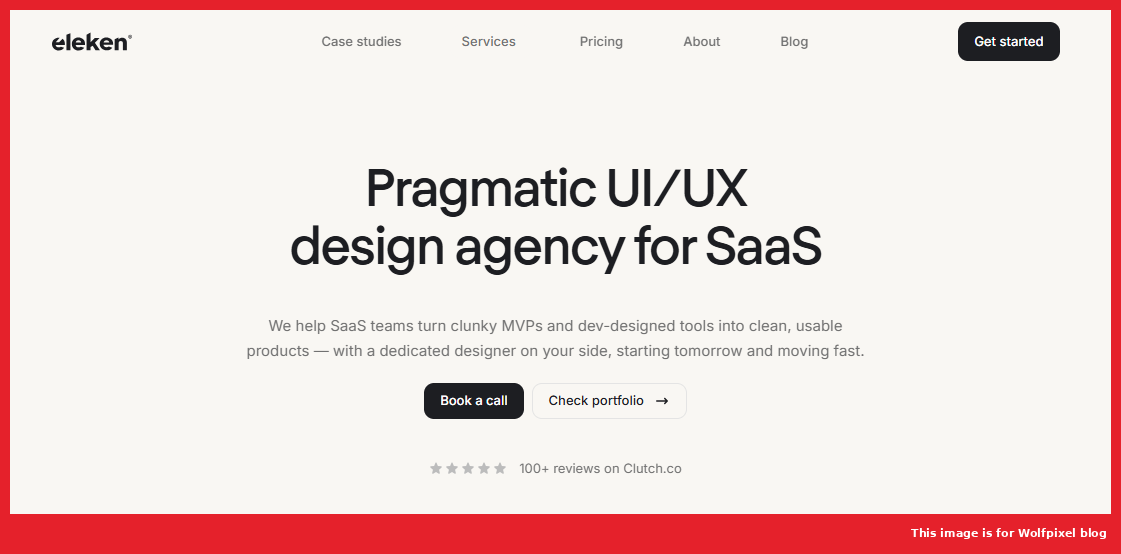
Eleken focuses purely on product design for SaaS, they intentionally don't take standalone landing pages, but if they design your product, the landing pages come with it. Their risk-free trial (you get a screen or two designed up front) is a genuinely smart way to de-risk the decision. Best for SaaS teams that need ongoing product design more than a one-off site.
Founded 2018 · Remote · New Clutch profile (no reviews yet)
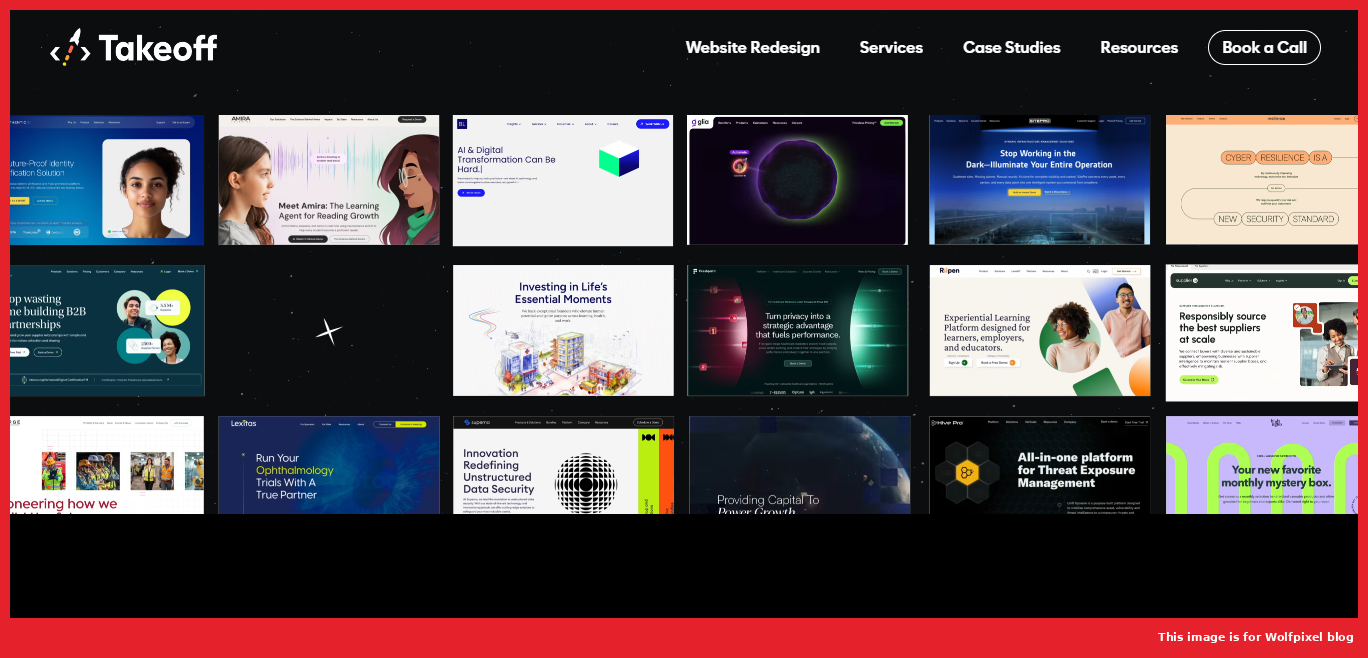
Takeoff, co-founded in 2018 by Lenny Rozental and Jessica Principato, is a remote B2B web design and SEO team that pairs website redesigns with search and conversion work. Takeoff does not publish set pricing and quotes each project, positioning itself as big-agency craft without the sticker shock. Every specialist on its remote team brings at least seven years of experience, and it launched 71 websites over two years. Pick Takeoff when you want big-agency craft and SEO without big-agency pricing.
Founded 2001 · Chicago · Clutch · 32 reviews · Client: Ryerson, Plum Diamonds
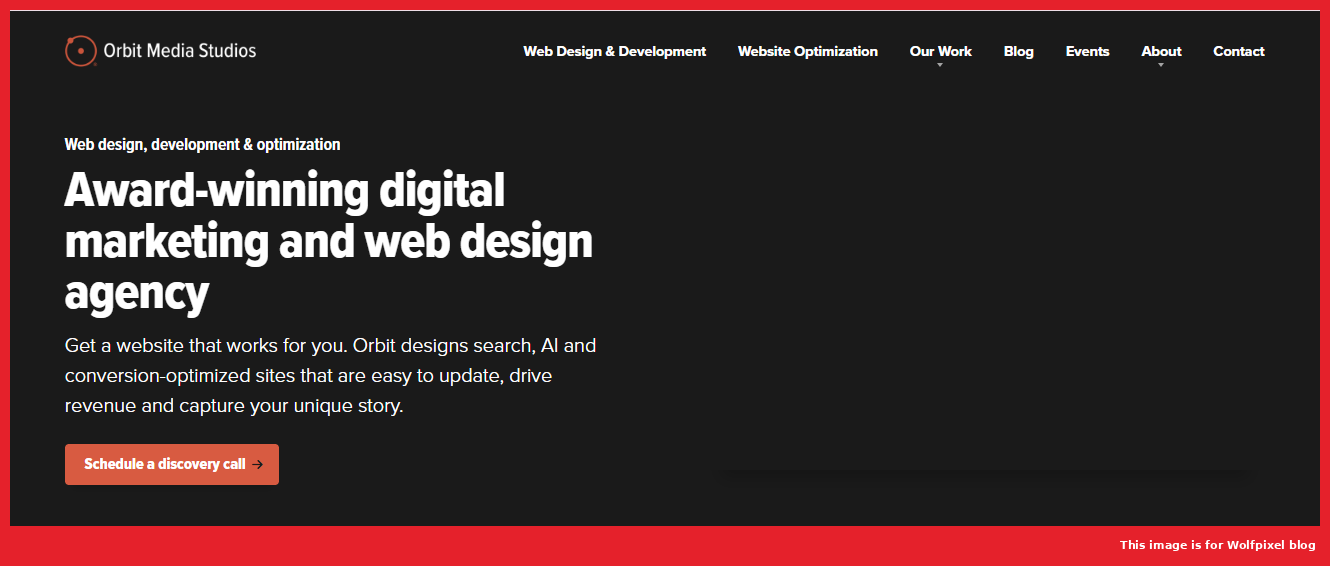
Orbit Media, founded in 2001 in Chicago by Andy Crestodina and Barrett Lombardo, is a roughly 50-person studio known for SEO- and conversion-focused custom sites. Orbit Media projects start around $50,000 at $150 to $199 an hour. Co-founder Andy Crestodina wrote Content Chemistry and runs Orbit’s annual content survey, now spanning twelve years, which makes the studio a real authority on SEO and content. Pick Orbit Media when search visibility, both classic SEO and the newer AEO for AI answer engines, sits at the center of your plan.
In 2026 a freelancer or template build runs about $5,000 to $15,000, and a boutique or mid-size studio about $15,000 to $80,000. A top-tier branding agency runs $100,000 to $300,000 and up, while a dedicated-designer retainer runs roughly $3,800 to $6,000 a month. A Webflow build usually costs 30 to 50 percent less than a custom React or Next.js stack.
In short: us, Wolfpixel, when you want a named senior team and a paid pilot before you commit; Huemor and Takeoff for conversion-first marketing sites; Webstacks and BRIX for product-grade, component-driven builds; Bop Design for senior B2B messaging; Orbit Media for search-led growth; and Clay and Ramotion when you are an enterprise with the budget to match.
Seed-stage and watching every dollar: start with a boutique like Bop Design, or a fast Webflow build from BRIX. Funded and scaling fast: Huemor or Webstacks for conversion-first marketing sites that move at your pace. Rebranding at enterprise scale: Clay or Ramotion, where brand and product are built as one system. Search-led growth is the priority: Orbit Media, which builds around SEO and the newer AEO for AI answers. You want a named team and a paid pilot before a big commitment: that is the bet we make at Wolfpixel.
A strong portfolio is the price of entry; the things that actually predict your result are easy to miss, so weigh these. SaaS domain expertise: do they understand trials, demos, onboarding, and multi-stakeholder buying, or are they generalists learning on your budget? Transparent pricing: a real team puts the number, the scope, and the revision rounds in writing before you sign. ROI-measurable outcomes: the best teams design to a metric, like signups, demo bookings, or trial conversion, not just to a look. Founder-friendly communication: a named team, clear updates, and someone who pushes back when you are wrong. Tech-stack fit: Webflow when you want speed and a site your team can edit; a custom React or Next.js build when you need deep, specialized functionality.
The biggest mistake we see is falling for the portfolio and forgetting to ask about the process, because a portfolio is a highlight reel of the perfect client, budget, and timeline. The person who charms you in the pitch is rarely the one who delivers, so get the names of your actual team written into the contract. Run one small paid pilot before any big retainer, because a single real project shows you how a team handles revisions and whether it pushes back when you are wrong. Be honest about your own side too: most delays start with slow feedback and fuzzy briefs, and the agency takes the blame for a timeline you slowed down.
If you're not sure what kind of help you need yet, our guide to choosing the right concept design service is a good starting point.
If you are a technical founder, run the due diligence the marketing copy never mentions. Who owns the code and the design files when the engagement ends? Get IP ownership in writing. You do not want to rent your own website. If they build in Webflow, ask about lock-in: can you export clean code and move off it later, or are you tied to their plan and theirs? Set performance and accessibility targets up front, like Core Web Vitals, a Lighthouse budget, and WCAG-level accessibility, not just a polished Figma file. Separate the marketing site from the product UI: most of these teams design the marketing site, not your in-app experience, and if you need both, say so, because they are different skills. Ask how they hand off to your engineers, including your stack, whether React, Next.js, or a headless CMS, and your deploy pipeline, so the build does not stall at integration. Settle who maintains the site after launch: a clean handoff to your team, or a retainer, priced before you sign.
The common mistakes are predictable: hiring on visuals alone, skipping the conversion plan, and ignoring how the site connects to your CRM and analytics. The other one we see often is buying the pitch team and getting the B-team, which is why named staff and a paid pilot matter more than a slick deck.
An agency is not the only path, and the honest answer is that it is not always the right one. A freelance designer costs less and suits a small, well-defined job, but you lose account management and carry the risk if they disappear mid-project. A template build on Webflow or WordPress is the cheapest start, but you get no strategy and no conversion work, which is fine for a pre-seed landing page but thin for a funded launch. An in-house hire pays off once you have a steady, ongoing design workload, not a one-off site. A full-service marketing agency bundles design with media spend; if you only need the website, you are paying for things you will not use.
Before you commit to any SaaS website design company, run this quick checklist. If a team clears all six, you're in safe hands:
Get those six right and the design takes care of itself. Get them wrong and no amount of visual polish will save the project.
What is a SaaS web design agency?
It's a design studio that builds websites, landing pages, and product interfaces specifically for software-as-a-service companies. Unlike a general agency, it understands SaaS-specific needs like trial funnels, onboarding, demo bookings, and product-led growth — so the site is built to convert visitors into users, not just to look good.
How much does a SaaS web design agency cost?
For 2026, expect roughly $2,000–$8,000 for a single landing page, $15,000–$50,000 for a multi-page marketing site, and $40,000–$150,000+ for full product UI or a design system. Freelancers typically charge $75–$150/hr; senior US agencies run $150–$200/hr. The biggest cost drivers are team seniority and whether development is included.
What's the difference between a SaaS web design agency and a regular web design agency?
A regular agency focuses on making a site look professional. A SaaS agency designs around business outcomes — activation, conversion, retention — and understands the long B2B sales cycle. The simplest test: a SaaS-native team asks about your funnel and metrics first; a generalist asks about visuals first.
How long does it take to design a SaaS website?
Most SaaS website projects run 6–12 weeks depending on scope. A focused landing page can ship in a couple of weeks; a full multi-page marketing site with custom design and development typically takes 12–16 weeks including research, wireframing, copy, design, build, and QA.
Should I hire a SaaS design agency or a freelancer?
Agencies bring cross-functional teams — strategy, UX, branding, development — which suits complex or fast-moving projects. Freelancers cost less and work well for smaller, single-scope tasks but can be slower and riskier on big builds. If your site is core to acquisition and onboarding, an agency is usually worth it.
Do SaaS web design agencies handle development too?
Some do full design and development (often on Webflow); others hand off to your dev team or partner with a build studio. Always confirm up front, because a design-only engagement and a design-plus-build engagement are very different budgets.
Is Webflow or WordPress better for a SaaS website?
For most modern SaaS marketing sites, Webflow wins on speed, clean code, and easy in-house updates without engineering. WordPress can still make sense for content-heavy sites or specific plugin needs. Many top SaaS agencies — including BRIX and Amply — default to Webflow for exactly these reasons.
What makes a good SaaS website?
Clarity above all: a visitor should understand what you do and why it matters within seconds. Add a clear value proposition, strong CTAs, fast load times, trust signals (logos, testimonials, metrics), frictionless trial or demo flows, and a modular structure your team can update as the product evolves.
How do I choose the best SaaS website design firm?
Check their own site, demand a case study with real numbers, confirm they understand SaaS funnels, and make sure pricing and scope are transparent. Then talk to them — the right firm feels like a partner who listens, not a vendor who pitches.
I've worked with dozens of SaaS businesses, and one thing holds true every time: great design makes people trust your product before they even try it. That's the real power of a strong SaaS website.
It's not about flashy colours or trendy templates. It's about guiding users clearly, solving real problems, and turning curiosity into signups. The best SaaS web design agencies don't just build pages, they build experiences people remember and buyers act on.
Take your time. Look at real work, ask the hard questions, and trust the team that talks outcomes over aesthetics. The right partner won't just make your site look good, they'll help your business grow.
And if you're still searching for the right fit, let's book a call with Wolfpixel. We don't just design SaaS platforms, we design trust.




.svg)



.svg)

.svg)

.svg)

.svg)

.svg)
.svg)
