October 22, 2026
Branding
Branding vs Brand Identity vs Logo Design: Key Differences


Branding is the ongoing work of shaping how people understand and experience a business. Brand identity is the visual and verbal system that expresses it consistently. Logo design creates the identifying mark within that system. They are connected, but they solve different problems and should not be treated as interchangeable purchases.
A logo project might fix an unreadable symbol. An identity project might connect a website, sales deck and packaging that currently look unrelated. Branding work might address an unclear audience, weak positioning or a promise the customer experience does not support. Before comparing proposals, decide which problem you are paying someone to solve.
I’m Masuder Rahaman, Founder & CEO and Brand Design Director at Wolfpixel, with 8 years of experience in branding. This guide is for business owners, founders and marketing teams deciding between a logo, an identity system and broader brand work. It connects the definitions with deliverables, published project examples and a practical scoping worksheet.
| Work | Main job | Typical output |
|---|---|---|
| Branding | Shape a coherent meaning and experience for the intended audience | Positioning, messaging and decisions carried through customer touchpoints |
| Brand identity design | Make the business recognizable and consistent in expression | Logo system, color, type, imagery, voice and application rules |
| Logo design | Create or refine an identifying mark | Primary mark, appropriate variants and usable master files |
“Brand” needs one more distinction. It can refer to the identifiers of a business and the associations people attach to it. In this guide, we use it mainly for that accumulated meaning and reputation. The business can influence this through branding; it cannot fully dictate what every customer believes.
Definitions vary across professional frameworks. The American Marketing Association’s branding overview describes identity through elements such as the name, logo, color and typography. Here, “brand identity” includes visual expression and the verbal rules that help a team communicate consistently. A proposal should specify its meaning rather than assume every studio uses the same boundary.
The nested view shows scope, not a formula for customer behavior. A recognizable identity cannot compensate indefinitely for an unreliable product or service. Equally, reliable delivery does not decide which logo version belongs on a dark background.
Share your current materials and the applications you need next. Discuss a focused brand identity scope with Wolfpixel, from logo systems and visual language to guidelines and working templates.


Branding is the deliberate work of deciding what a business should mean to an audience and supporting that meaning through what it says, shows and does. It includes strategic decisions and their ongoing application. A strategy document is an important input, but the work continues after the presentation.
Strategy establishes who you serve, what problem or aspiration you address, what makes the offer different and why people should believe it. It also sets priorities: a company cannot credibly stand for every benefit to every audience at once. These decisions give identity and communication work something more useful than personal taste to follow.
The value proposition, supporting messages, tone and proof help people understand the offer. Different audiences may need different explanations without changing the underlying promise. A procurement team might want implementation evidence, while an everyday user needs to know how the product helps with a task.
A business promising simplicity needs understandable pricing and onboarding. One promising personal care needs service that feels attentive. Design can help communicate those qualities, while product and operations have to deliver them. If customer complaints concern missed appointments, changing the logo alone does not address the cause.
For a digital product, the identity also needs to work inside real interfaces. Our business guide to UI/UX design explains how user journeys, controls and feedback support the experience your brand promises.
For a company whose audience, offer or positioning has changed, use our guide to planning a rebranding strategy to explore the wider decision. For a stable business that needs a coherent expression, brand identity design services may be the more focused scope.
Brand identity design turns the intended positioning and personality into a recognizable visual and verbal system. It makes repeated decisions reusable, so different people can create a website, a presentation or a package without inventing the brand again each time.
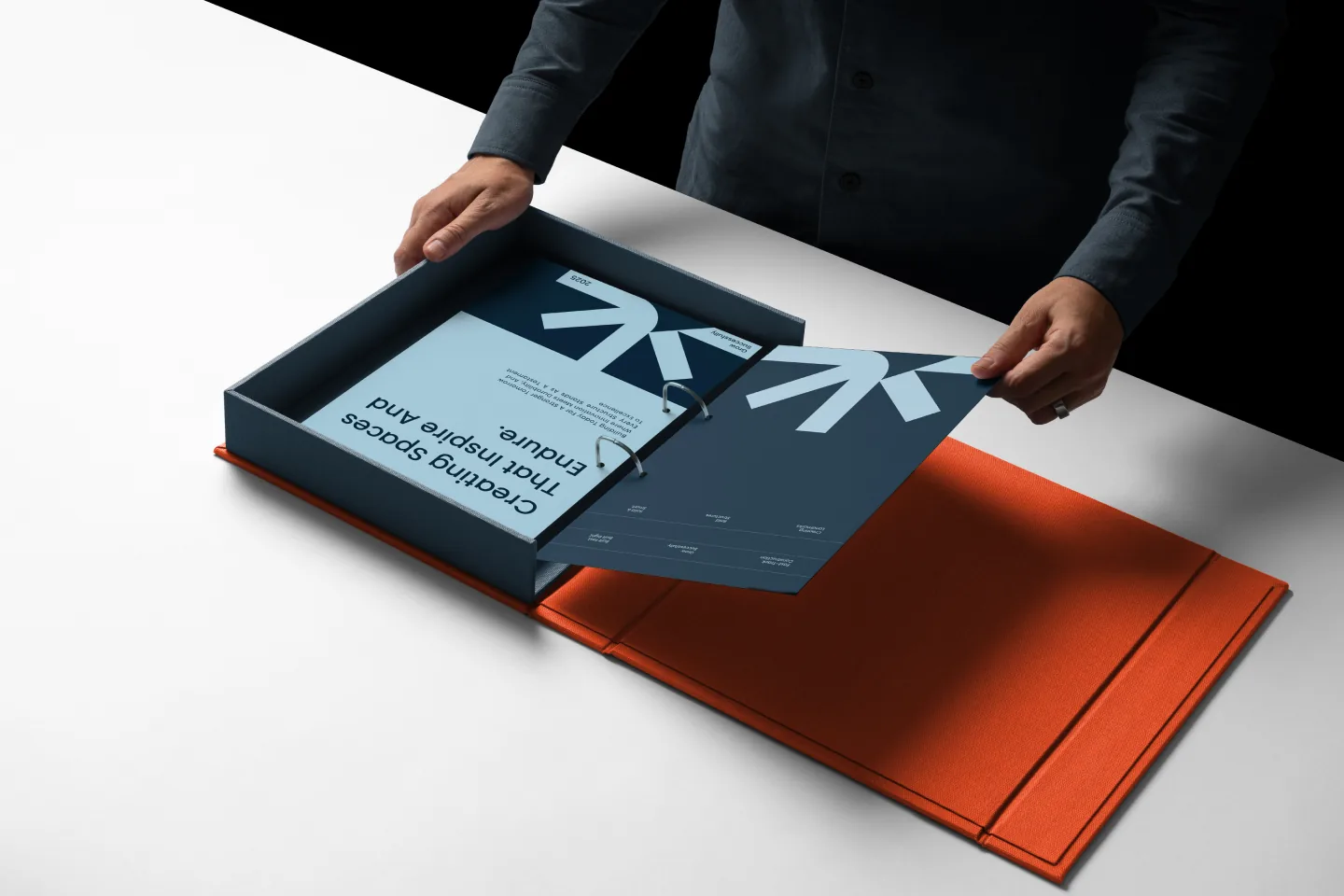
Visual identity concerns what people see: marks, type, color, imagery and layout. Brand identity is often used more broadly to include verbal expression such as voice and messaging. Some providers use “brand identity” to mean visual identity only. Ask whether copy, naming and voice are included rather than assuming they are.
For a closer look at how color, type and hierarchy work together, see our guide to visual design principles and elements.
The identity is the system. Guidelines explain how to use it. A beautifully designed guideline document cannot replace working templates, correctly prepared assets or clear ownership. Conversely, assets without useful rules can drift as more people start producing material.
Our complete guide to what brand identity includes develops the definition further. For the handover document itself, see what to include in practical brand guidelines.
Logo design creates an identifying mark for a business, product or organization. That mark may be a wordmark, a symbol, a monogram or a combination. It should suit the context in which people encounter it and work in the applications included in the brief.
A logo can communicate associations through form, lettering and color, but it does not contain a complete positioning strategy or customer experience. Its meaning also develops through repeated use. Do not ask a symbol to explain every service or represent every company value literally.
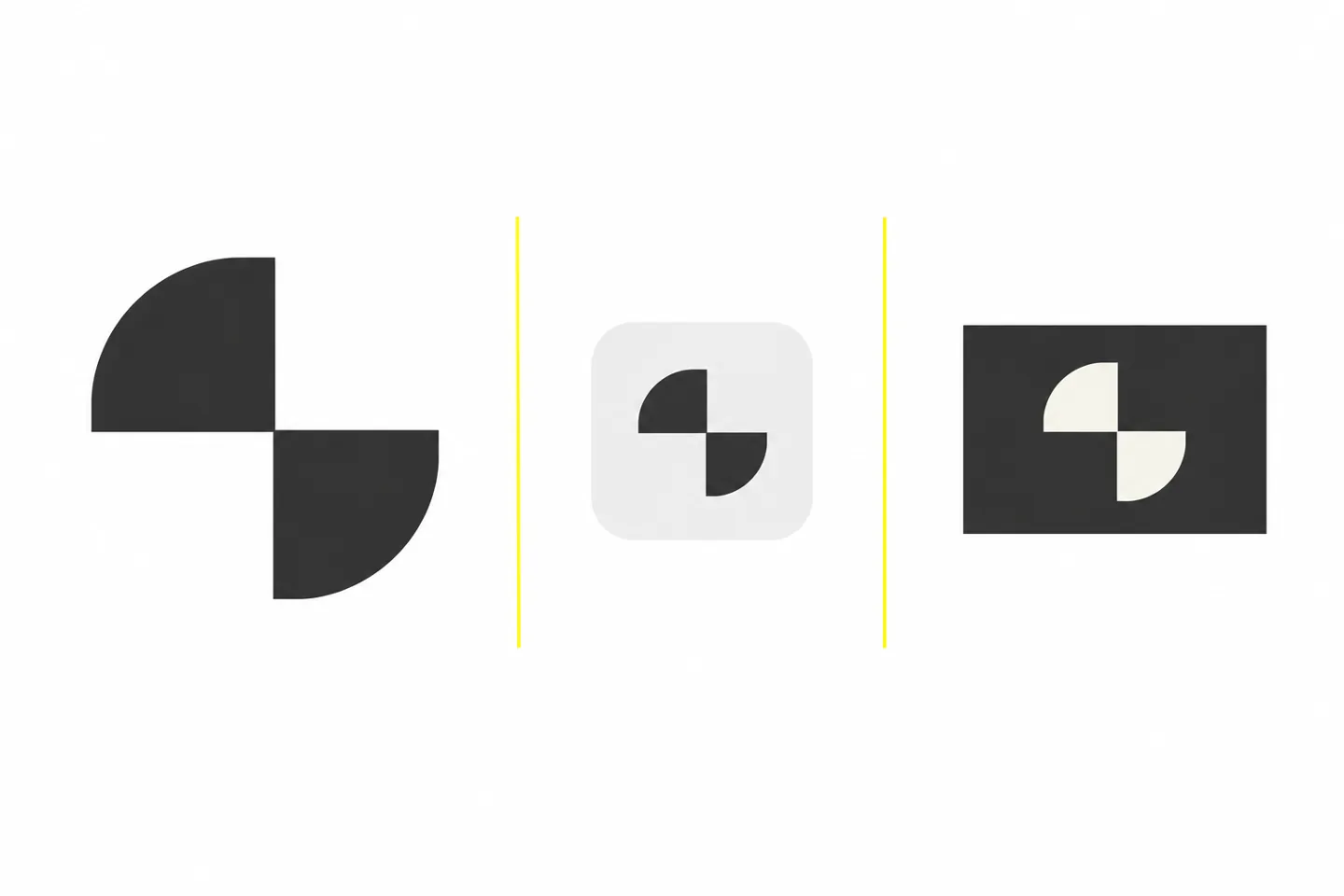
A favicon, a shop sign and a narrow email header pose different constraints. The answer is not always one unchanged file scaled everywhere. A compact version may help, but it needs to remain recognizable as the same identity. Review real applications before approving the mark.
Yes. If the mark is recognizable, usable and appropriate for the business, an identity project can build around it. Refinement may address spacing or reproduction issues without replacing the central idea. A full replacement needs a reason beyond the fact that a new design engagement has started.
Branding asks what people should understand about the business and what will make that belief credible. Brand identity gives the business a consistent way to express that direction. The relationship runs both ways: applying an identity can reveal that a message is unclear or a promise is unrealistic.
Consider an illustrative accounting firm that wants to serve early-stage technology companies. Branding work might clarify the audience, the service model and the proof of relevant experience. Identity work might establish the wordmark, editorial style, presentation layouts and voice. The firm still has to deliver advice and service that match its promise.
Both are design work, but their boundaries differ. The logo is one element. The identity coordinates the elements around it and makes them usable across channels. Replacing the logo on unrelated layouts will not automatically create a coherent website, proposal and social presence.
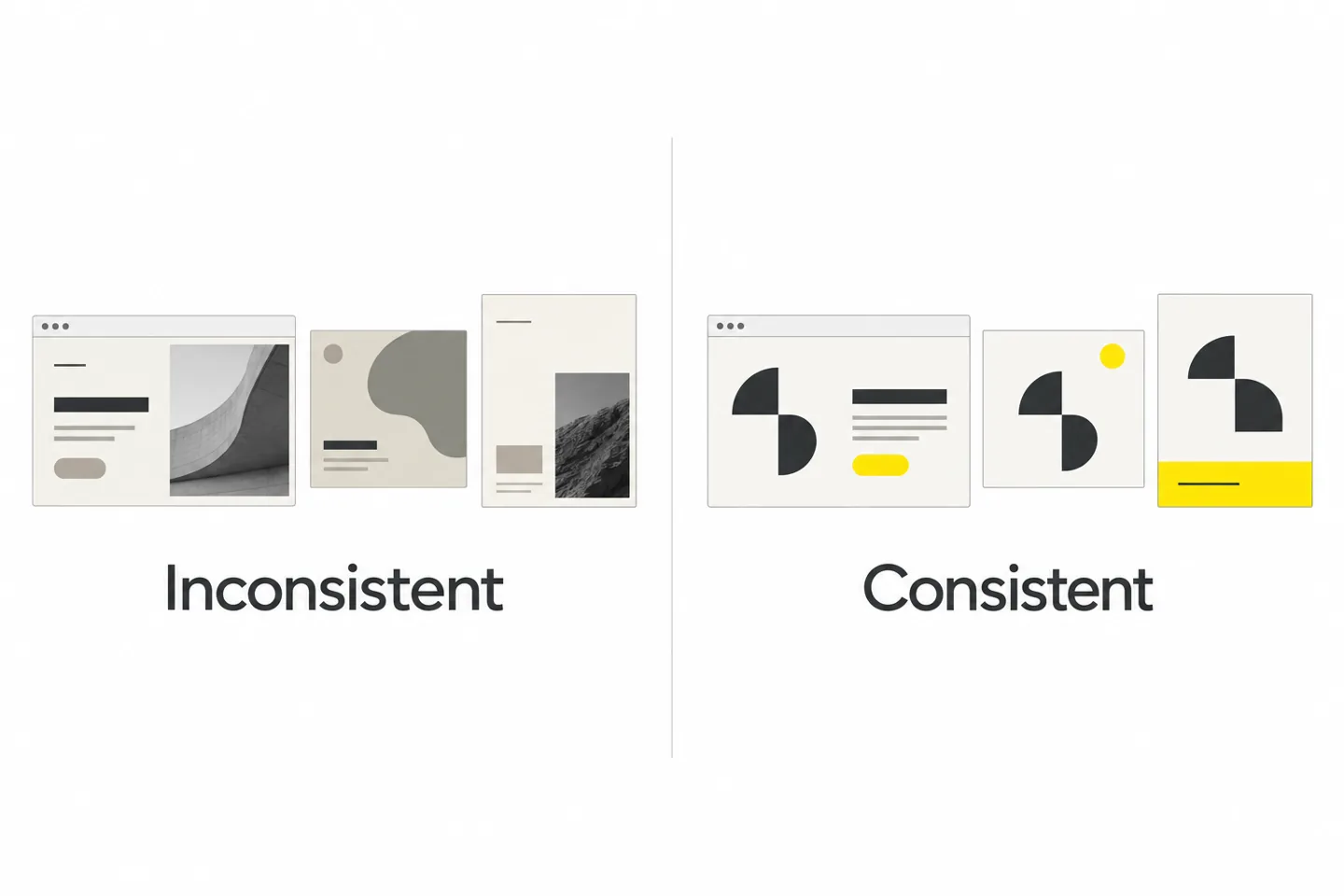
If buyers cannot explain what the business offers or why it fits their needs, investigate positioning, messaging and experience. If the mark becomes illegible in important uses, investigate the logo. Sometimes both need work, but diagnose the causes separately so the scope is proportionate.
A useful way to compare briefs is to ask what will be different when the project ends. “A new symbol” is a logo outcome. “Our team can produce coherent launch materials” is an identity outcome. “Our positioning and customer promise fit the audience we now serve” is a broader branding outcome.
| Area | Logo-focused scope | Brand identity scope |
|---|---|---|
| Discovery | Enough context to define the mark’s role | Audience, positioning and touchpoint review appropriate to the brief |
| Logo | Agreed mark and practical variants | The same logo work, integrated with the wider system |
| Color and type | Limited usage guidance if included | Palette roles, hierarchy and application rules |
| Messaging | Usually limited unless specified | Voice or messaging only where explicitly included |
| Applications | Selected tests or mockups | Agreed working templates and rollout assets |
| Handoff | Masters, exports and basic usage | Assets, guidelines, templates and ownership |
These are scope examples, not a standard package every agency must follow. Brand strategy, naming, copywriting, packaging production and website development may be separate. A proposal called “complete branding” can still exclude them. Compare inclusions and acceptance criteria rather than the package name.
A presentation image shows how a design could look. An editable sales-deck template, printer-ready artwork or implemented website is a different deliverable. If the team needs to use it after handoff, specify the format, editing requirements and production responsibility.
A logo refinement, an identity built around an existing mark and a repositioning with a new identity require different work. Research, touchpoint count, stakeholder reviews, naming decisions and production needs all affect effort. A date without those assumptions is difficult to assess.
Use Wolfpixel’s brand identity service scope to discuss the system and applications your business needs. For the sequence of strategy, identity development and rollout, read our step-by-step brand identity design process.
Choose according to the evidence, not simply company size. A small team selling across several channels can need a stronger identity system than a larger business making one limited update. The question is where the inconsistency or misunderstanding starts.
| What you observe | What to investigate | Possible starting point |
|---|---|---|
| The mark fails in important uses | Legibility, file quality and reproduction | Logo refinement or replacement |
| Materials look unrelated | Typography, color, imagery and reusable layouts | Identity system or a focused refresh |
| Customers misunderstand the offer | Audience, positioning, messaging and proof | Brand strategy and communication |
| The business has changed direction | Relevance of existing positioning and identity | Rebranding assessment |
| The promise does not match delivery | Product or operational causes | Experience improvement alongside communication |
An early business with a settled name and a narrow offer might start with a compact identity: a usable logo, core color and type choices, a few templates and basic rules. That is already more than a standalone logo. Avoid commissioning elaborate applications you will not use, while ensuring the essentials are workable.
If the audience and offer are still changing, invest enough in discovery to make the current direction explicit. Build an identity that can support the near-term launch without pretending the strategy is settled forever. A polished presentation is not proof that customers want the product.
Before changing a familiar identity, establish what people recognize and what the business needs to change. A refresh can update applications without discarding the mark. A strategic rebrand may be appropriate when the old positioning no longer fits. The review should consider customer recognition, rollout cost and operational readiness.
Our rebranding services address a different scope from a focused brand identity system. The service choice should follow the brief, not force every company into the same engagement.
Published identity projects are useful when you can connect the intended character with the design decisions and applications. They are not, by themselves, evidence of increased sales or customer trust. The two Wolfpixel examples below provide design context without adding unsupported outcome figures.
The Astrix Builders brand identity project documents an approach built around architectural geometry, a structural symbol and a coordinated visual system. Its applications include signage, business cards, layouts and a guidelines book.
The logo is the identifier; the wider use of geometry, typography and color makes it an identity. The lesson for a construction business is to review how the system supports both digital and physical applications. A symbol shown on a single polished billboard is only one part of that assessment.

Our SpareCharge brand identity project presents a peer-to-peer EV charging platform connecting drivers with private charger owners. Its published brief centers on accessible energy, local connections and sharing unused charging capacity.
The distinction matters: the name and promise provide a direction, while the visual identity expresses it across applications. The actual charging experience still has to support that promise. The public project describes the identity and intended character, not a measured increase in adoption.
The official IBM Design Language covers areas such as typography, color, photography, illustration, layout and data visualization. It is a useful reference for seeing how a recognizable organization coordinates many types of expression. Use it to understand the role of rules and components, not as a style to copy.
Harvard Business School Online’s brand identity overview also includes elements such as name, logo, palette, packaging, voice and imagery. The shared point is that the identity has several coordinated parts; the correct scope still depends on the business.
Before contacting a designer, collect the problems you are trying to solve. Keep observations separate from solutions. “Our proposals are hard to recognize” is an observation to investigate. “We need a new logo” is already a proposed solution.
| Observation | Evidence to review | Decision to make |
|---|---|---|
| The team uses conflicting styles | Recent materials and the rules available to their creators | Add guidance and templates, or redesign the system? |
| Customers cannot describe the offer | Sales questions, interviews and existing messages | Clarify positioning, messaging or both? |
| The logo is hard to reproduce | Small, monochrome, print and digital tests | Repair exports, refine the mark or replace it? |
| The new offer feels disconnected | Audience expectations and existing brand associations | Extend the identity, create a sub-brand or review positioning? |
This worksheet is an editorial tool for framing a discussion, not a validated scorecard. A short interview or a handful of examples can identify useful questions without proving what the entire market believes. When several causes overlap, prioritize the issue blocking the most important customer task or launch requirement.
If the team cannot make a new on-brand document without guessing, the handoff needs more work. If the files are easy to use but customers still misunderstand the offer, investigate messaging and the offer rather than automatically redesigning the identity again.
If the direction is clear but your materials are inconsistent, explore brand identity design for a consistent business presence. Bring a few examples and the applications you need next. If you are unsure whether the problem is the logo, the system or the positioning, discuss your branding brief with Wolfpixel so the first conversation can focus on the right level of work.
Branding is the ongoing work of shaping how people understand and experience a business. Brand identity is its coordinated visual and verbal expression. Logo design creates the identifying mark used within that system. They are connected, but their scope and deliverables differ.
No. A logo identifies a business, while a brand also includes the meaning and expectations people associate with it. The product, service, communication and customer experience influence those associations over time.
Usually, yes. An identity system includes the mark and decisions about color, typography, imagery and applications. However, an identity project can retain an existing logo, and voice or messaging should be confirmed explicitly in the scope.
Yes. A suitable existing logo can remain while the surrounding typography, color, layout, imagery and templates are improved. Change the mark when evidence shows it no longer works for the agreed uses or business direction.
Clarify enough strategy to guide the design before committing to a final logo. The required depth depends on the business. Audience, positioning, personality and practical use cases give the design a basis that goes beyond personal preference.
Visual identity covers visible elements such as the logo, color, type, imagery and layout. Brand identity is often broader and may include verbal expression. Providers use the terms differently, so confirm what is included in a proposal.
No. The identity is the set of assets and decisions. Guidelines explain how to apply them. A useful handoff can also include editable templates, organized master files and clear responsibility for maintaining the system.
Not automatically. Match the scope to the problem, evidence and near-term applications. A compact identity may be enough when positioning is clear. Broader strategy work may be needed when the audience or offer is uncertain.
A broader engagement often requires more work, but the price depends on inclusions rather than the label. Compare research, strategy, applications, production, revisions and handoff before comparing quotes. A logo refinement and a complete repositioning are different scopes.
Review what has changed. If the positioning still fits but the expression is inconsistent or dated, a refresh may work. If the audience, offer or intended meaning has materially changed, assess the wider brand strategy before deciding what to redesign.
This guide uses the linked AMA, Harvard Business School Online and IBM resources to support its definitions and examples. Wolfpixel projects link to their published descriptions. The anonymous mockups and scope worksheet are illustrative. Definitions and package boundaries vary, so the article recommends written inclusions rather than treating one terminology model as universal.