


12 Oct 2026
UI/UX Design
Human Interface Guidelines: How to Use Them Across Your Mobile App Design Process


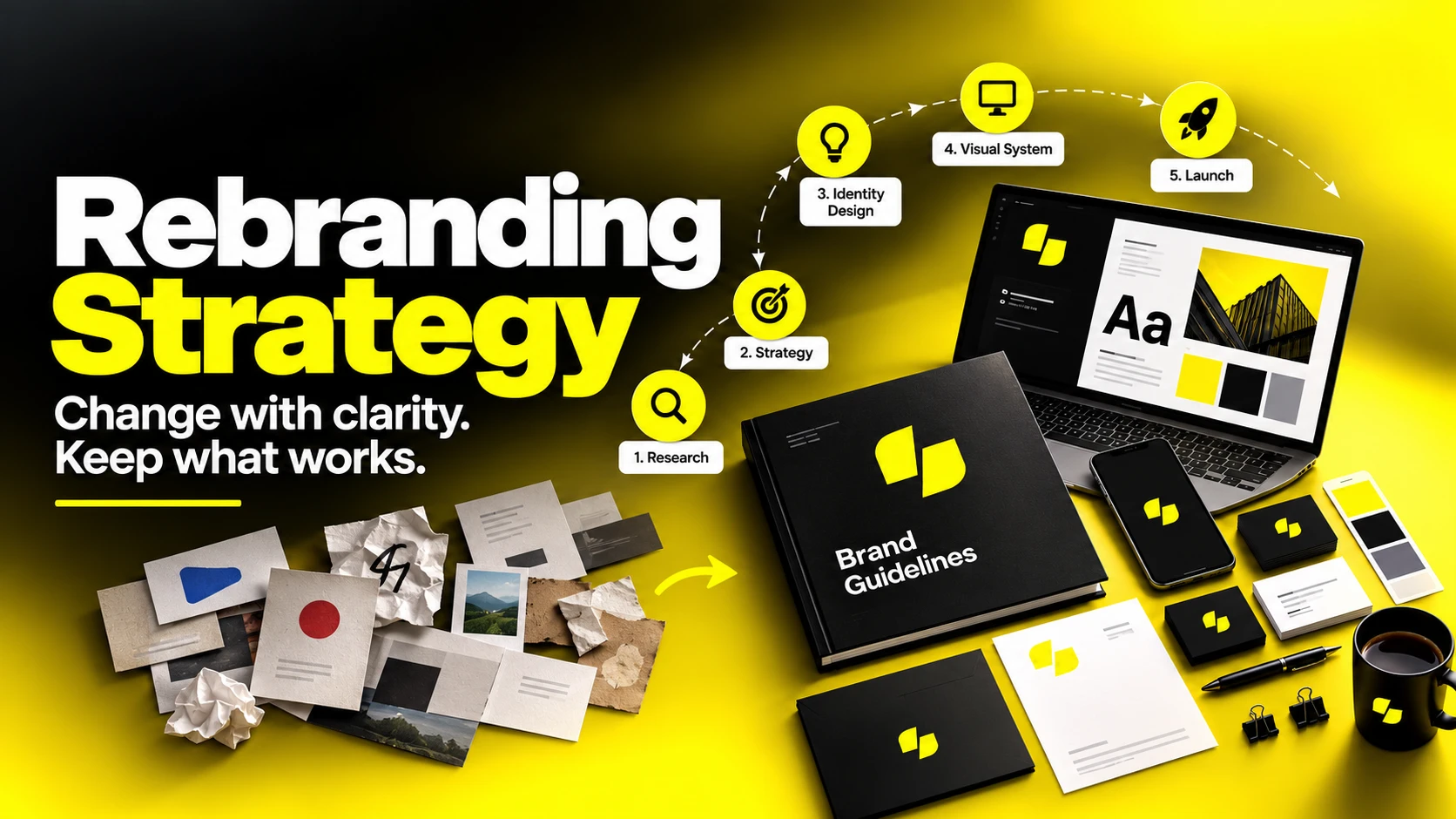
A rebranding strategy is a structured plan for changing how a company is perceived, covering its positioning, name, visual identity, voice, and customer experience, so the brand matches where the business is going. Rebrand when your positioning, audience, offering, or company structure has fundamentally changed; choose a brand refresh when the strategy is sound but the visuals feel dated. A good rebrand moves in order: research, strategy, identity design, system building, rollout, and measurement.
Most teams don't start with "we need a rebranding strategy." They start with a feeling: the website doesn't match the product anymore, sales keeps explaining what the company actually does, or the logo looks like it belongs to a smaller, earlier version of the business.
That feeling is worth taking seriously, but it is also where expensive mistakes begin. I'm Maniruzzaman Jubayer, COO & Co-founder of Wolfpixel. The hard part of a rebrand is deciding what needs to change, what must be protected, and how to carry the new identity through every screen, email and touchpoint without disrupting the product experience customers rely on.
This guide is written for founders, product leaders, heads of growth, and teams deciding whether to invest in design. You'll learn how to tell if you need a rebrand at all, how a rebrand differs from a brand refresh, what the rebranding process steps look like in practice, what drives rebranding cost, how to evaluate a design partner, and which mistakes derail even well-funded projects.
A rebranding strategy is the plan that connects why your brand is changing to what changes, who it's for, and how the change reaches customers. It's a business decision expressed through design, not a design project looking for a business reason.
A complete rebranding strategy usually addresses five layers:
| Layer | What it covers | Example questions |
|---|---|---|
| Positioning | Who you serve, what you stand for, how you differ | Has our core audience or category changed? |
| Verbal identity | Name, tagline, messaging, tone of voice | Does our name still describe what we do? |
| Visual identity | Logo, color, typography, imagery, motion | Does our look signal the quality we deliver? |
| Experience | Product UI, website, onboarding, support, packaging | Does the product feel like the brand promises? |
| Internal alignment | Culture, guidelines, team adoption | Can every team apply the brand consistently? |
In my work leading design teams, the gap I see most often isn't between the old logo and the new one. It's between the new marketing site and the product people log into the next morning. For digital businesses, customers experience your brand mostly through interfaces: buttons, empty states, error messages, notification emails. If the rebrand stops at the homepage, users notice the disconnect immediately, and the new brand feels like a costume rather than a change.
That's why I treat the design system as part of the rebranding strategy from day one, not as a cleanup task after launch.
Your product experience is part of the brand system.
For the fundamentals, read our guide to what brand identity includes.
Share your current brand and product experience. We can discuss whether a refresh or rebrand fits your goals, and what the scope and rollout should include.


Knowing when to rebrand is mostly about separating structural problems from cosmetic ones. Here are the most reliable signs you need a rebrand:
M&A rebrands deserve special care. You typically choose between keeping both brands, absorbing one into the other, creating a combined brand, or launching a new one. The decision should reflect which brand carries more trust with the customers you most want to keep. Internally, the rollout is often harder than the design: employees from both sides need templates, guidelines, and a clear explanation of why the new identity exists.
Not every frustration calls for a rebrand. Pause if:
In those cases, a brand refresh, or even a guidelines and design system overhaul, is usually the better investment.
Separate changes to the business from changes to its visual presentation.
The rebrand vs brand refresh decision determines budget, timeline, and risk more than anything else.
| Factor | Brand Refresh | Full Rebrand |
|---|---|---|
| Trigger | Dated visuals, inconsistency, new channels | New positioning, audience, offering, or company structure |
| What changes | Logo refinement, color, typography, imagery, templates | Positioning, messaging, often name and full identity |
| Recognition risk | Usually lower when recognizable assets are retained | Higher if familiar assets are replaced; plan the transition |
| Timeline | Shorter | Longer |
| Stakeholders | Mainly design and marketing | Leadership, product, sales, legal, support, HR |
| Investment | Moderate | Significant |
| Example scenario | A SaaS company modernizes its UI kit and illustration style | A company renames itself after moving into a new category |
Ask your leadership team one question: "If our visuals were perfect, would our brand still describe the company we're becoming?"
There is also a middle path: an evolutionary rebrand, where positioning and messaging change while selected recognizable colors, symbols or wordmarks carry forward. Retaining useful assets can help manage recognition risk.

Choose the smallest scope that addresses the underlying problem.
Well-known rebranding examples are useful less for their visuals than for the decisions behind them.
Source: Dunkin’s new-brand announcement.
Source: Mailchimp’s 2018 brand announcement.
Source: Airbnb’s company timeline.
Source: Gap’s October 2010 statement.
Source: Research on Tropicana’s packaging change.
Source: X’s 2023 company timeline.
In digital products, your "shelf" is the home screen, the browser tab, and the notification tray. When I plan identity changes with product teams, we test the new icon and favicon at their smallest real sizes, next to competitors, before anyone signs off on the full system. A mark that looks strong on a presentation slide can disappear at 16 pixels.
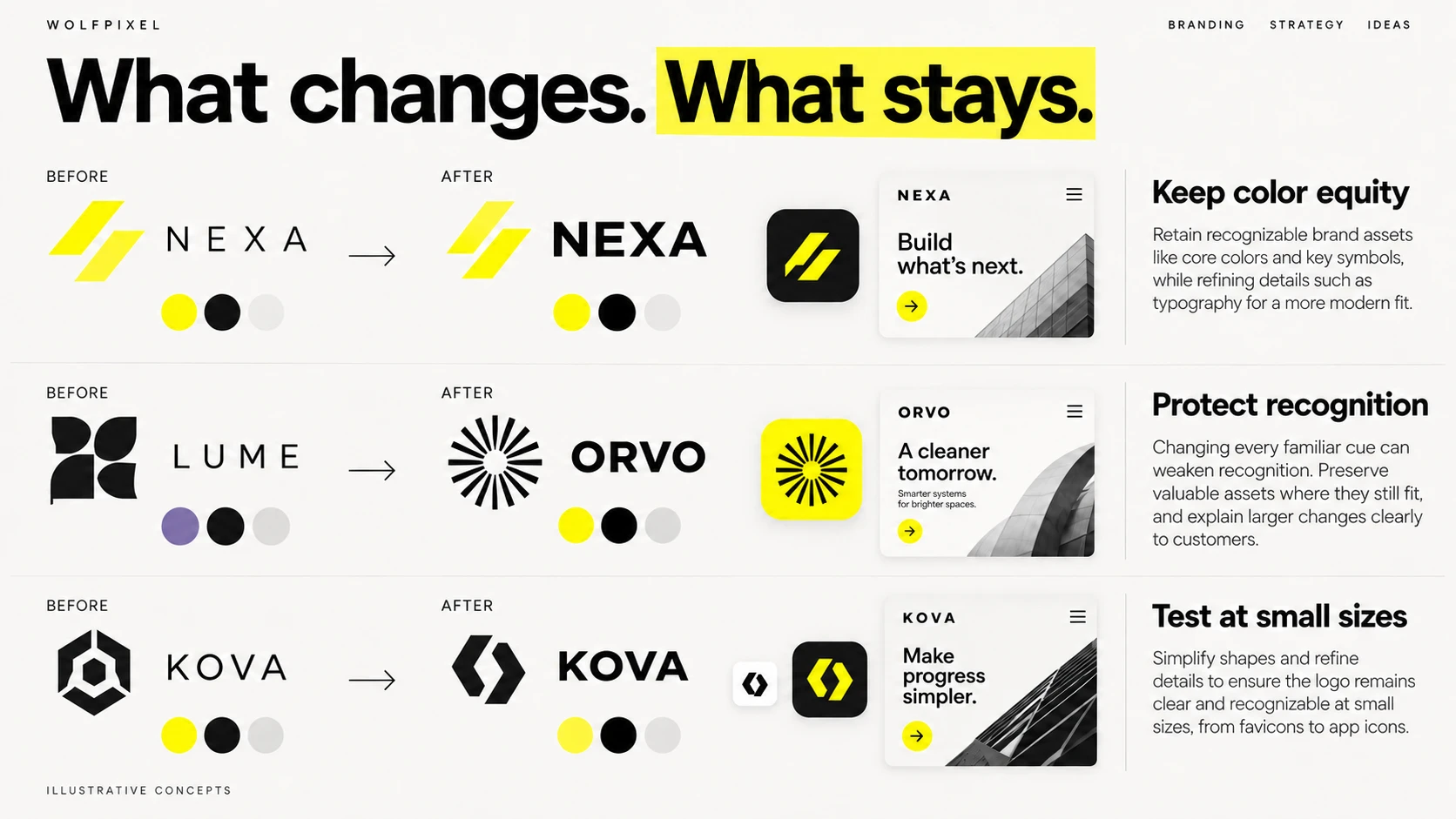
Protect recognizable assets and test the identity where customers encounter it.
Here are the core rebranding process steps I use, adapted for companies with digital products.
Write down why you're rebranding in one or two sentences, and what success looks like. Useful metrics include branded search interest, direct traffic, conversion rates on key pages, sales cycle friction, recruitment interest, and customer perception from surveys or interviews. Capture a baseline before anything changes; otherwise you can't evaluate the result.
Collect every place the brand appears: website, product UI, app store listings, emails, decks, documents, social profiles, packaging, and support content. Note inconsistencies and which assets carry recognition.
this audit almost always surfaces more touchpoints than leadership expects, especially inside the product. System emails, PDF exports, embedded widgets, and legacy help-center pages are easy to forget and awkward to discover after launch.
Define your positioning statement, target audiences, value proposition, brand personality, and messaging pillars. If a name change is on the table, this is when naming exploration and legal trademark screening happen. Get leadership sign-off on strategy before visual design begins. This single step prevents the most expensive redesign cycles.
Develop the logo, color palette, typography, imagery direction, iconography, and motion principles. Present options against the strategy, not personal taste. Test the identity in real contexts: product screens, mobile, dark mode, social avatars, and small sizes.
Accessibility check: confirm color contrast meets WCAG guidelines for text and interface elements. A beautiful palette that fails contrast will quietly break your product UI.
Source: W3C guidance on text contrast.
Also review W3C’s non-text contrast guidance for relevant controls and graphical objects.
Turn the identity into something teams can use:
Token-based migration can make a product rebrand easier to maintain. When semantic colors and typography are tokenized, shared styles can update consistently, but component overrides, themes and states still require review.
Source: Google’s site-move guidance.
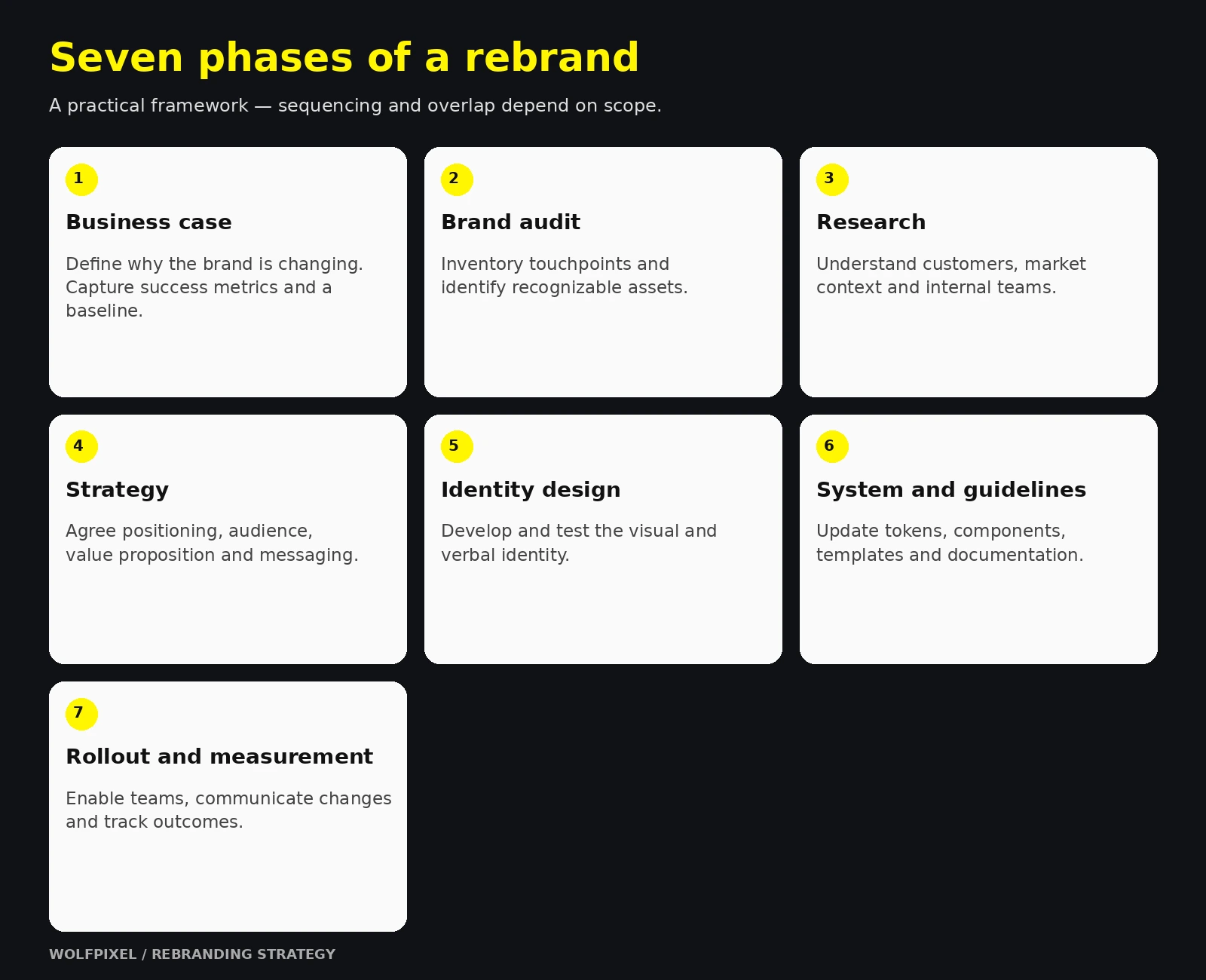

Agree the strategy before visual design; include implementation in the plan.
For identity development, see our brand identity creation process. For product migration, review our SaaS redesign guide.
Rebranding cost varies too widely for a single number to be useful. It depends on scope, company size, number of touchpoints, and who does the work. Instead of anchoring on a figure, understand the drivers.
| Cost driver | Why it matters |
|---|---|
| Scope | A refresh costs far less than a strategy-led rebrand with naming. |
| Research depth | Customer interviews and market analysis add time but reduce risk. |
| Naming and trademarks | Naming changes can add screening, specialist advice, registration and domain costs; requirements depend on jurisdiction and scope. |
| Number of touchpoints | Every product surface, template, and channel needs updating. |
| Product and engineering effort | UI updates, token migration, and QA consume development capacity. |
| Physical assets | Signage, packaging, merchandise, and printed materials. |
| Launch and communication | Campaigns, PR, customer comms, and internal enablement. |
| Partner type | Freelancers, specialist studios, and large agencies price very differently. |
Evaluate a rebrand against the specific friction it should remove: unclear positioning, repeated sales explanations, inconsistent product experiences or a fragmented post-merger identity. Measure against a baseline, and account for other changes that can affect results; a new identity does not guarantee improved conversion.
Practical advice: budget for rollout as well as identity design. A strong brand book has limited value if product screens, emails and templates remain inconsistent.
Budget for rollout and measurement as well as identity design.
You can handle a light refresh in-house if you have strong design leadership. A full rebrand usually benefits from professional design and branding support, either as a full partner or working alongside your internal team.
| Criterion | What to look for |
|---|---|
| Strategic thinking | Do they ask about business goals before showing visuals? |
| Relevant portfolio | Work with digital products, not only logos and posters |
| Systems capability | Design tokens, component libraries, accessibility, and guidelines |
| Process transparency | Clear phases, deliverables, feedback rounds, and decision points |
| Collaboration fit | Comfortable working with product managers and engineers |
| Handover quality | Source files, documentation, and support after launch |
| References | Clients who can speak to the process, not just the outcome |

Evaluate the evidence, process and handover behind the portfolio.
Explore our rebranding strategy and design services and Core.hr brand and website case study. Then discuss your rebranding scope with Wolfpixel.
Use this rebranding checklist before, during, and after launch.


A launch is ready when the team, product and customer touchpoints are ready.
It depends on scope. A brand refresh can move relatively quickly, while a strategy-led rebrand with naming, research, and product-wide implementation takes considerably longer. Rollout across product and operational touchpoints often takes more time than the identity design itself.
For significant changes, yes. Customers who rely on your product should know what's changing, when, and what stays the same, especially if logins, domains, app names, or billing descriptors are affected. Surprise changes to familiar assets can cause confusion or concern.
Yes. Frequent identity changes make it harder to build recognition. Early-stage companies often benefit more from clear positioning and a flexible, simple visual system that can evolve, rather than repeated full rebrands.
A visual refresh does not necessarily change URLs, but redesign changes to content, structure or performance can still affect search visibility. A name or domain change requires careful migration planning. Map relevant redirects, update canonicals and sitemaps, monitor Search Console and communicate the new name. Expect possible temporary fluctuations during URL migrations.
Ideally a small core group with a clear decision-maker, often spanning marketing or brand, design, and product leadership. Broader teams such as sales, support, engineering, legal, and HR should be consulted and enabled, but not all of them need final approval rights.




.svg)



.svg)

.svg)

.svg)

.svg)

.svg)
.svg)
