


 19 min read
 Published
Building a fintech app means designing and engineering software that moves, stores or analyzes people’s money, inside rules written for banks. The app itself is the smaller part of the work. The bigger decisions are which regulated activity you are in, whether you launch through a partner bank or your own licenses, which providers handle the money, and how you design an experience people trust with their savings.
I’m Masuder Rahaman, Founder & CEO of Wolfpixel. Our team designs fintech products, from mobile wallets to investment platforms and finance dashboards. We are the design partner on these projects, not the bank, the lawyer or the backend team, and this guide is written from that seat: it explains the full build so you can plan it, and goes deepest on the product and design decisions we see founders get wrong.
This is not legal advice. Fintech rules depend on what your app does, where your users live and who your partners are. Use this guide to prepare better questions for a fintech attorney and your bank partner.
The short answer: to build a fintech app, (1) validate a narrow problem and the unit economics, (2) choose your regulatory path, usually a partner bank, with counsel, (3) turn the compliance rules into product requirements, (4) map the critical journeys, (5) design and test them with users, (6) build an MVP on proven infrastructure, (7) test security and compliance and pass app store review, and (8) launch to a small group before you scale.
Key takeaways:
- Decide what regulated activity you are in before you design anything. A wallet, a lending app and a budgeting app have very different rules.
- Most US startups launch through a partner bank or a banking-as-a-service provider. Your own licenses give more control, but take longer and cost more.
- Compliance rules shape the interface: identity checks in onboarding, error and dispute flows, disclosures, authentication and data access.
- Trust is designed. Clear money states, honest fee and insurance wording, and onboarding people can finish matter as much as features.
- Published cost figures come from agencies, not independent research. Plan for the bank partner and compliance work, not only the build.
How we wrote this: we reviewed the pages ranking for “how to build a fintech app” in November 2026, including DICEUS, Bolder Apps, Anything, Stripe, Interexy, MadAppGang and WiserBrand, then went to the primary sources: FinCEN and CFPB rules, the FTC Safeguards Rule, the PCI Security Standards Council, NIST, W3C, and Apple and Google’s app store policies. The launch path comparison, the journey list and the design must-haves are our own, based on fintech products we have designed. The full list is in Sources and method.
Why fintech apps are harder to build than other apps
A typical app can ship a bug and fix it next week. A fintech app that shows the wrong balance, loses a transfer or leaks customer data can lose its bank partner, its app store listing or its customers’ trust in one day. Three things make fintech different:
- Regulation is built into the product. Identity checks, record keeping, dispute handling and disclosures are legal requirements, and most of them appear on screen.
- Someone else holds the license. Most startups depend on a partner bank, and that bank reviews the product, the marketing and the compliance program.
- Trust is the product. People are already cautious. Pew Research found that 76% of Americans have used at least one of four major payment apps, but about a third of users are only a little or not at all confident those apps keep their information safe from hackers.
The opportunity is still large. BCG reports that fintech revenues grew 21% year over year in 2024, up from 13% in 2023, while fintech has still captured only about 3% of global banking and insurance revenue pools.
Step zero: choose your app type and the regulated activity
Before you pick a tech stack, be precise about what your app does with money. That decides the rules, the partners and a large part of the budget.
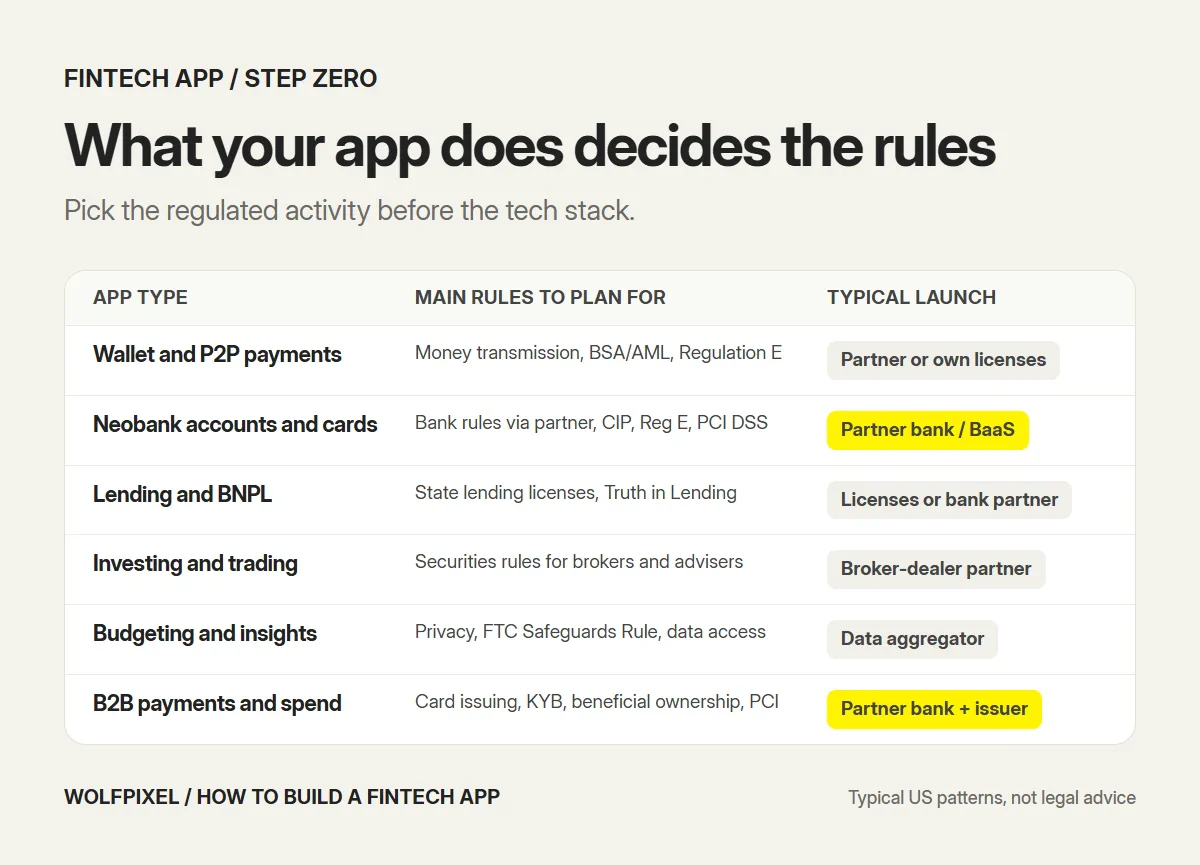
| App type | What it does with money | Main rules to plan for | Typical way to launch |
|---|---|---|---|
| Wallet and P2P payments | Holds balances, sends and receives money | Money transmission, BSA/AML, Regulation E | Partner bank or provider, or your own state licenses |
| Neobank (accounts and debit cards) | Offers deposit accounts and cards | Bank rules apply through the partner bank, CIP, Regulation E, PCI DSS for card data | Partner bank through a BaaS platform |
| Lending and buy now, pay later | Lends money to consumers or businesses | State lending licenses, Truth in Lending, fair lending, app store loan rules | State licenses or a bank lending partner |
| Investing and trading | Buys and holds securities or crypto | Securities rules for brokers and advisers, crypto rules | Through a registered broker-dealer or adviser partner |
| Budgeting and personal finance | Reads account data and gives insight | Privacy and data security (GLBA Safeguards Rule), data access terms | Account data aggregator, no money movement |
| B2B payments and spend management | Cards, bill pay, expense tools for businesses | Card issuing through a bank, KYB and beneficial ownership, PCI DSS | Partner bank and card issuing platform |
Many products combine several types. A budgeting app that adds savings accounts becomes a neobank. Each new money feature can add a new set of rules, so plan the roadmap with that in mind.
The three ways to launch a fintech app in the US
This is the decision competitors mention least and founders ask us about most. It sets your timeline, your control over the product and who you depend on.
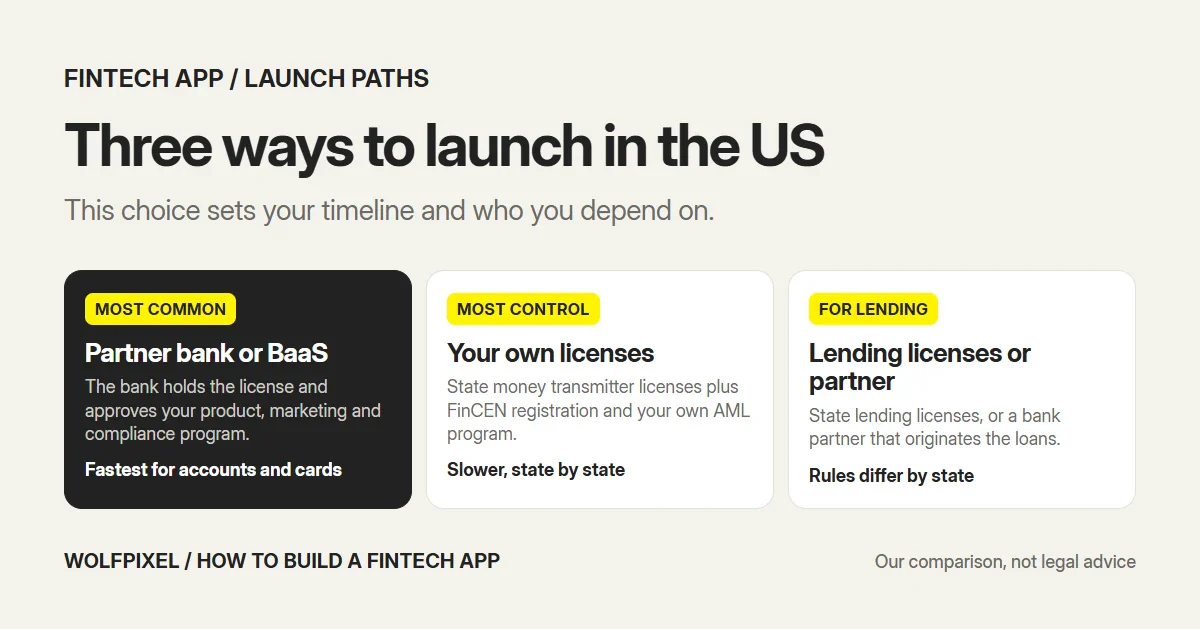
| Path | Who holds the license | Speed to launch | Control | Main risk |
|---|---|---|---|---|
| Partner bank or BaaS platform | The bank | Usually the fastest route for accounts and cards | The bank approves the product, the marketing and the compliance program | Depending on one bank or middleman |
| Your own state money transmitter licenses | You, state by state, plus FinCEN registration | Slower: applications, bonds and examinations in each state | High, but you run the full compliance program | Cost and time before you can launch nationally |
| Lending licenses or a bank lending partner | You (state lending licenses) or the bank | Depends on the states and products | Varies with the structure | Rate, fee and disclosure rules that differ by state |
What the partner bank path means in practice. In a sponsor bank model, the bank stays responsible for compliance. US banking regulators said in their 2023 guidance on third-party relationships that using a third party does not diminish the bank’s responsibility to operate safely and in compliance with the law. In practice, the fintech usually builds and runs the onboarding, monitoring and support flows to the bank’s requirements, and the bank reviews them. Expect the bank to approve your app, your disclosures and your marketing.
What going alone means. A company that transmits money itself generally needs state money transmitter licenses and must register with FinCEN as a money services business. Under FinCEN’s rules, registration is due within 180 days of the business being established, and a money services business must maintain an effective anti-money laundering program with internal controls, a designated compliance officer, training and independent review. Many states have adopted the Money Transmission Modernization Act, a model law from state regulators that makes requirements more consistent, but licensing is still state by state.
The lesson from Synapse. In 2024, Synapse, a middleware company connecting fintech apps to partner banks, collapsed and customers of several fintech apps lost access to their money. The CFPB later alleged that Synapse failed to maintain adequate records of the location of consumers’ funds, with a shortfall of between $60 million and $90 million. Whatever path you choose, make sure you can always reconcile where every customer’s money is, independently of any one provider.
How to build a fintech app in 8 steps
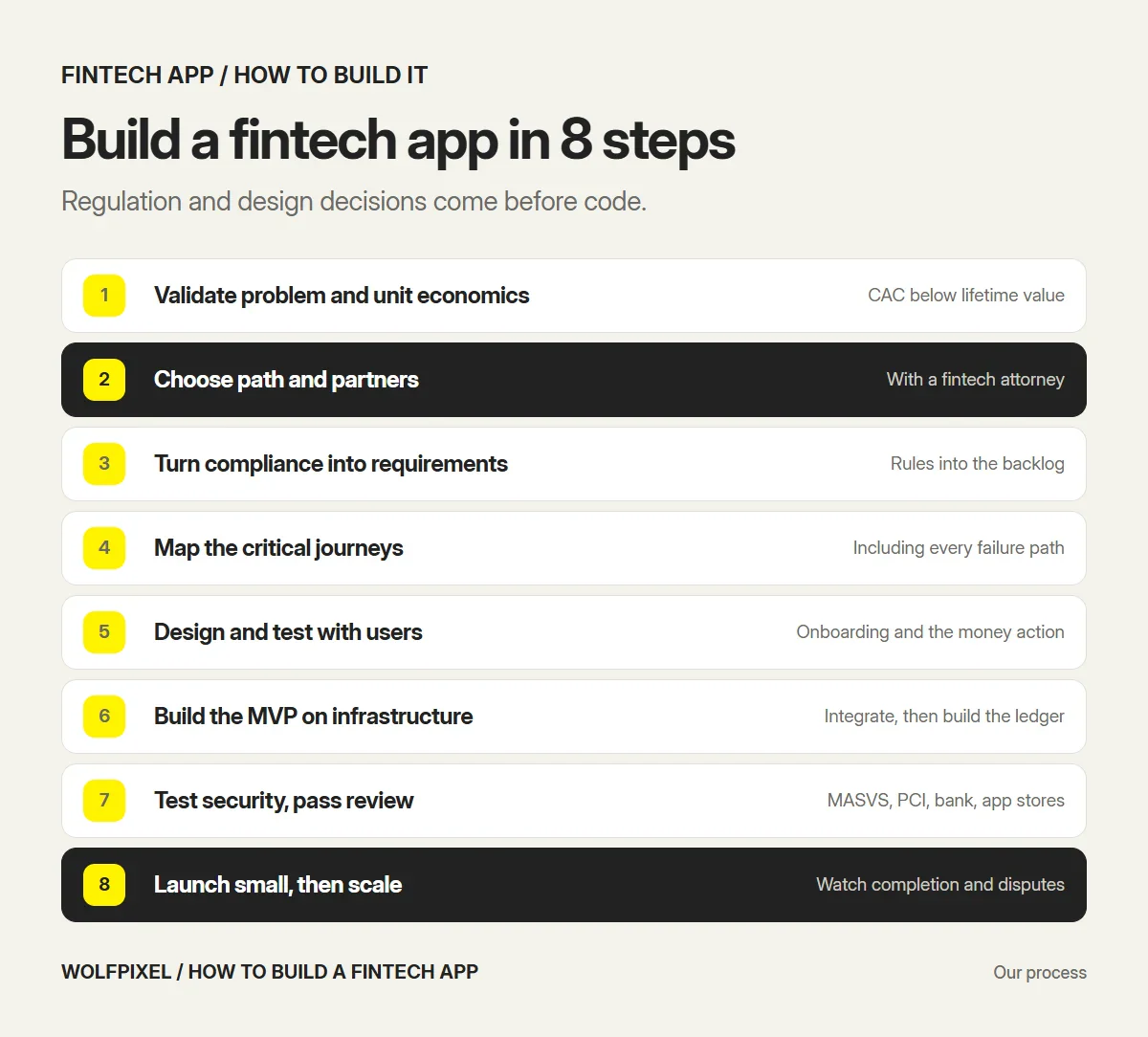
- Validate the problem and the unit economics. Pick a narrow audience with a real money problem. Interview them and study why current banks and apps fail them. Check early that customer acquisition cost can stay below lifetime value, because fintech acquisition is expensive. Stripe’s guide to building a fintech company starts in the same place: an underserved audience and constant customer feedback.
- Choose your regulatory path and partners. With a fintech attorney, decide between a partner bank, your own licenses or a lending structure, and shortlist providers. Talk to partner banks early: their requirements will shape the product.
- Turn compliance into product requirements. List every rule that affects the interface: what identity data you collect and when, what disclosures appear where, how errors and disputes are reported, how users log in and how data is shared. Put them in the product backlog, not a separate legal document.
- Map the critical journeys. For most fintech apps these are sign-up and identity verification, funding the account, the core money action, viewing balances and history, getting help and disputing a transaction. Draw each as a user flow, including every failure path.
- Design and test with real users. Design the journeys, build a clickable prototype and test it with people from your audience before engineering starts. Onboarding and the core money action deserve the most testing. Our guide to fintech app design shows the trust patterns that work, with real examples.
- Build the MVP on proven infrastructure. Integrate banking, card, payments, identity and fraud providers instead of building them. Build your own ledger and reconciliation carefully. Keep the first release narrow: one audience, one core action.
- Test security and compliance, then pass app review. Run security testing against a standard such as the OWASP Mobile Application Security Verification Standard, check card data handling against PCI DSS if it applies, complete your partner bank’s review and prepare for Apple and Google’s financial app rules.
- Launch small, then scale. Start with a closed beta or waitlist. Watch onboarding completion, failed transactions, support tickets and disputes, fix the friction, then grow marketing spend.
The US compliance rules that shape your product
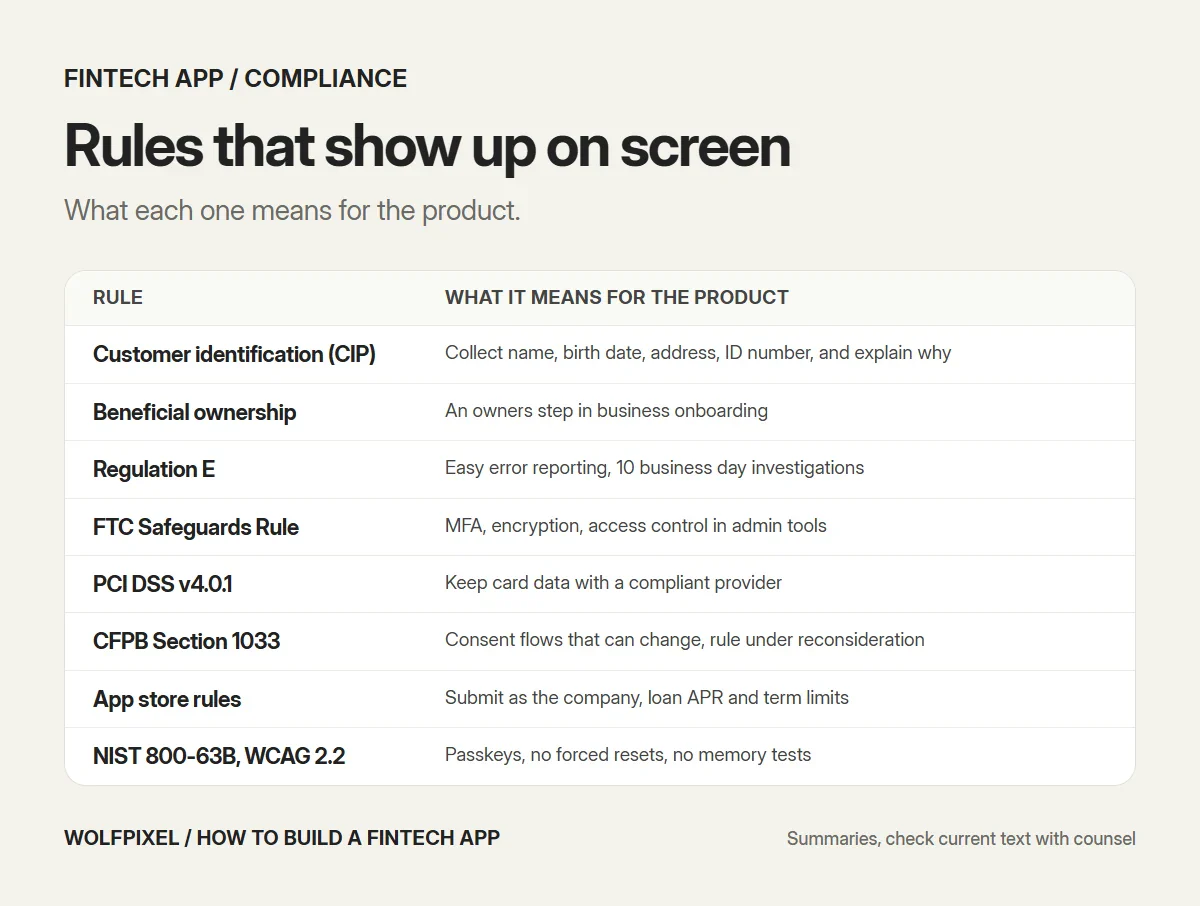
These are the rules we see appear most often in fintech product requirements. The right column is what each one means for design. Your attorney and partner bank will tell you which apply to you.
| Rule | What it says (summary) | What it means for the product |
|---|---|---|
| Customer Identification Program (31 CFR 1020.220) | Banks must collect at least name, date of birth, address and an identification number and verify identity within a reasonable time | Onboarding must collect this data clearly, explain why and handle failed verification |
| Beneficial ownership (CDD rule) | Covered institutions must identify and verify the beneficial owners of legal entity customers | Business onboarding needs an owners step that is easy to complete and save |
| Regulation E error resolution (12 CFR 1005.11) | For consumer transfers, the institution must investigate within 10 business days, or up to 45 days with provisional credit | A clear way to report a problem, status updates and records of what happened |
| FTC Safeguards Rule (GLBA) | Non-bank financial companies need a written security program, multi-factor authentication and encryption, and must report breaches affecting 500 or more consumers to the FTC within 30 days | MFA in the login flow, careful data display and admin tools with proper access control |
| PCI DSS v4.0.1 | Security standard for card data. Requirements that were future-dated became effective after March 31, 2025 | Keep card data with a compliant provider where possible, so your app never stores it |
| Open banking data rights (CFPB Section 1033) | The CFPB finalized the rule in 2024, but it is under reconsideration, and a federal court has put its compliance dates on hold | Design consent and data-sharing screens that work under today’s aggregator terms and can adapt |
| App store rules | Apple says financial apps should be submitted by the legal entity providing the services. Apple and Google restrict personal loan apps with an APR of 36% or more or full repayment within 60 days | Plan the developer account, disclosures and loan terms before submission |
| Authentication (NIST SP 800-63B-4) | NIST’s 2025 guidance asks for at least one phishing-resistant authentication option at AAL2, longer passwords and no forced periodic changes | Passkeys and biometrics instead of password rules that annoy users |
| Accessibility (WCAG 2.2) | Includes Accessible Authentication and Redundant Entry criteria | Don’t force memory tests or retyping in onboarding and login |
The open banking rule is the one to watch. The CFPB issued its final rule in October 2024 and began reconsidering it in August 2025. A federal court has enjoined enforcement until the reconsideration is complete, so the original compliance dates are on hold. If your product depends on reading users’ bank data, design the consent flow so it can change without a redesign.
Fintech app infrastructure: what you build vs what you integrate
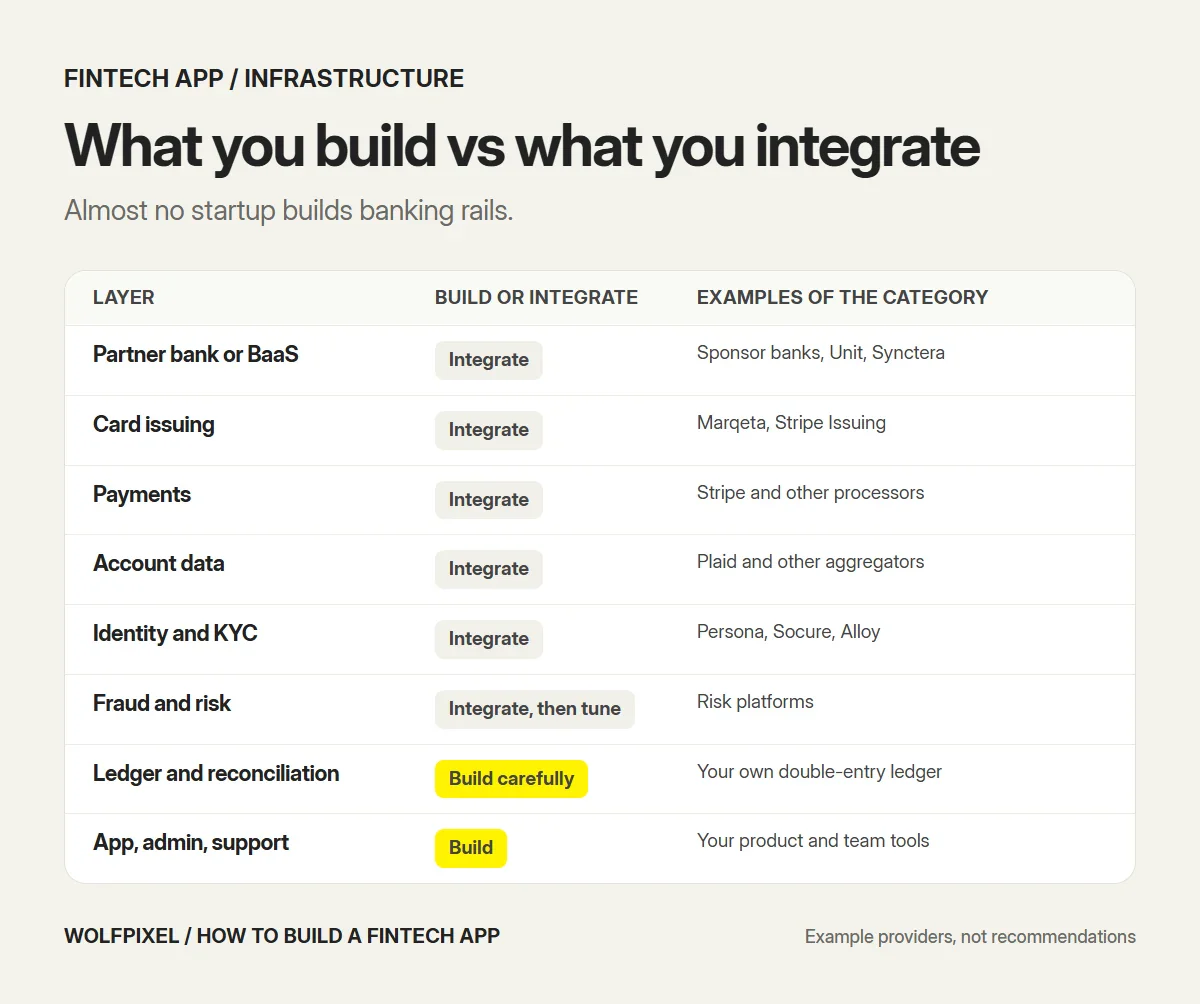
Almost no startup builds banking rails. The work is choosing providers in each layer and building your product, ledger and experience on top.
| Layer | What it does | Build or integrate | Examples of the category |
|---|---|---|---|
| Partner bank or BaaS platform | Holds accounts and the license | Integrate | Sponsor banks, directly or through BaaS platforms such as Unit or Synctera |
| Card issuing and processing | Issues debit, credit or virtual cards | Integrate | Marqeta, Stripe Issuing |
| Payments | Card acceptance, ACH, payouts | Integrate | Stripe and other processors |
| Account data | Connects users’ existing bank accounts | Integrate | Plaid and other aggregators |
| Identity verification and KYC | Verifies people and businesses | Integrate | Persona, Socure, Alloy |
| Fraud and risk | Scores transactions and sign-ups | Integrate, then tune | Fraud and risk platforms, often from the same providers |
| Ledger and reconciliation | Records every balance and movement | Build carefully, or use a ledger product | Your own double-entry ledger |
| App, admin and support tools | What users and your team see | Build | Your product, your admin panel, your support views |
The names are examples of each category, not recommendations. Choose providers with your partner bank, because banks often have approved lists. For the app itself, a common stack is Swift and Kotlin or a cross-platform framework such as React Native or Flutter on mobile, a backend in Node.js, Python, Java or Go, and a relational database such as PostgreSQL for financial records.
Design must-haves for a fintech app
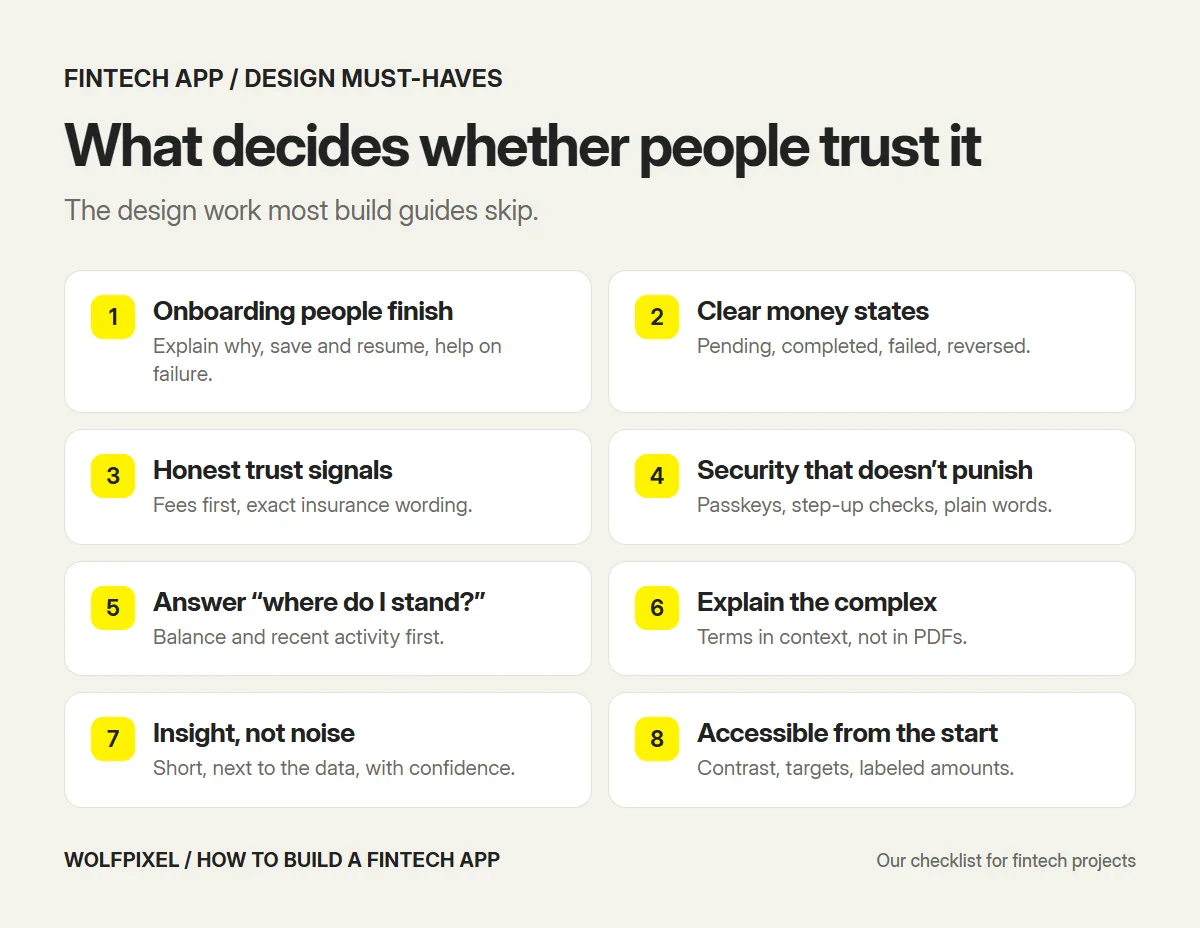
This is where we spend our time on fintech design projects, and where competitors’ guides usually have one line: “design the UI.” These are the decisions that decide whether people finish sign-up, keep using the app and trust it with more money.
1. Onboarding and identity checks people actually finish
Identity verification is required, so the question is how painful it is. Explain why you need each piece of information before you ask for it, especially the Social Security number. Ask for the minimum first and the rest later. Let people save and come back. Give clear help when a document photo fails, and a human path when automated verification can’t decide. WCAG 2.2’s Redundant Entry criterion is a good rule here: don’t make people type the same information twice.
2. Clear money states
Every transaction should show its real state: pending, completed, failed or reversed, with an expected time and a reason. “Processing” with no time is where support tickets come from. Design the dispute flow too: Regulation E gives consumers rights to report errors on electronic transfers, so make reporting a problem as easy as making a payment, and keep users updated while it is investigated.
3. Honest trust signals
Trust comes from clarity, not badges. Show fees before the user commits. Use exact, approved wording about deposit insurance. In July 2024, the federal banking agencies warned about misrepresentation of deposit insurance coverage in bank and fintech arrangements, so don’t imply your company is a bank or that FDIC insurance covers more than it does. Show who holds the money and how to reach support.
4. Security that doesn’t punish users
Use passkeys or biometrics where possible, ask for extra verification when risk is higher rather than on every action, and avoid password rules that NIST no longer recommends, such as forced periodic changes. Explain security steps in plain language, because an unexplained extra step looks like a bug.
5. A first screen that answers “where do I stand?”
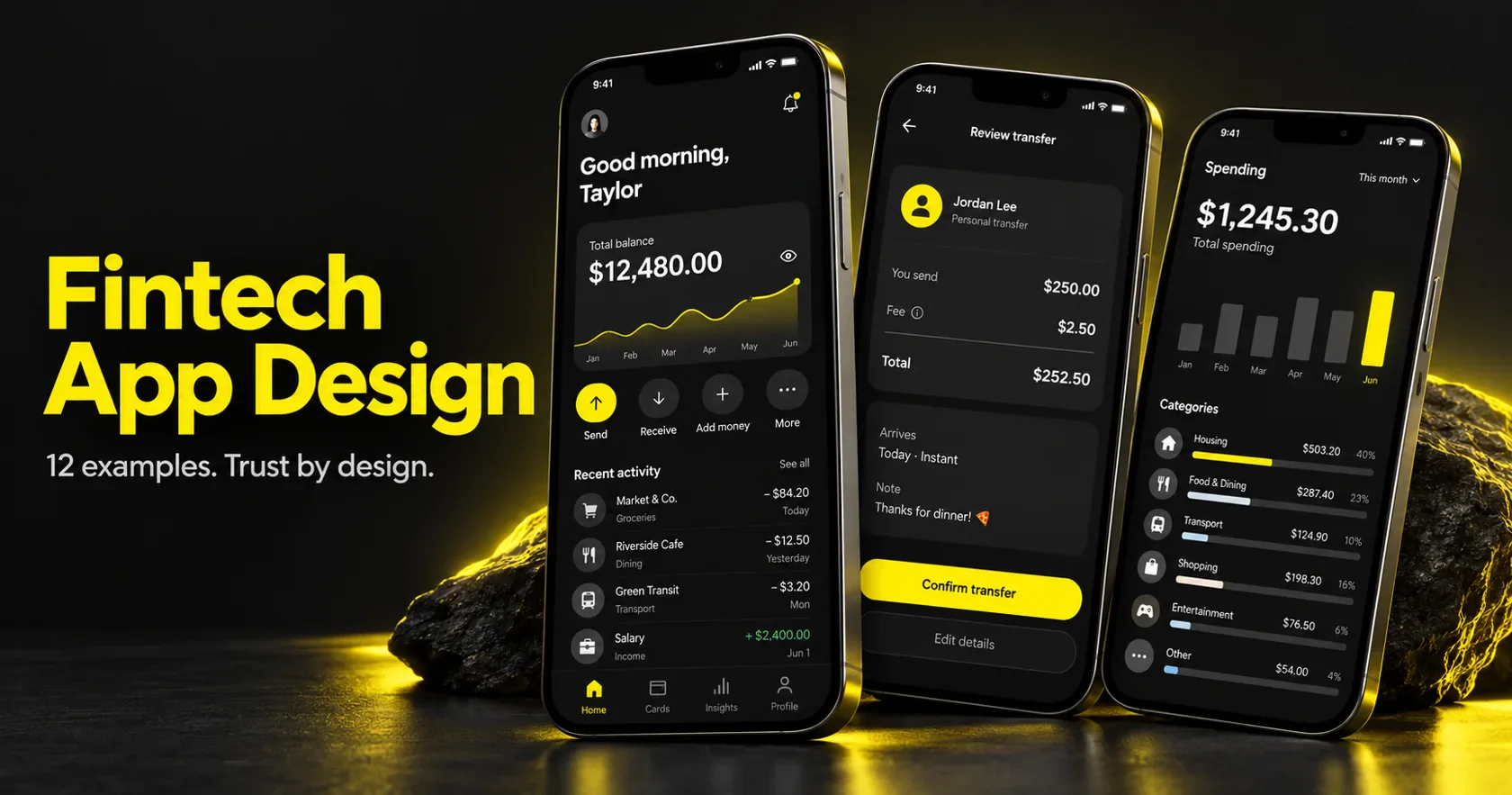
People open a money app to check something. The home screen should answer that before anything else. For the ZenPay wallet, we designed the home screen to answer three questions in order: how much is available, what can I do with it and what happened recently. For a finance management dashboard, we put balance, spending and transactions on the main screen and kept everything else one step away.
6. Complex products explained in plain language
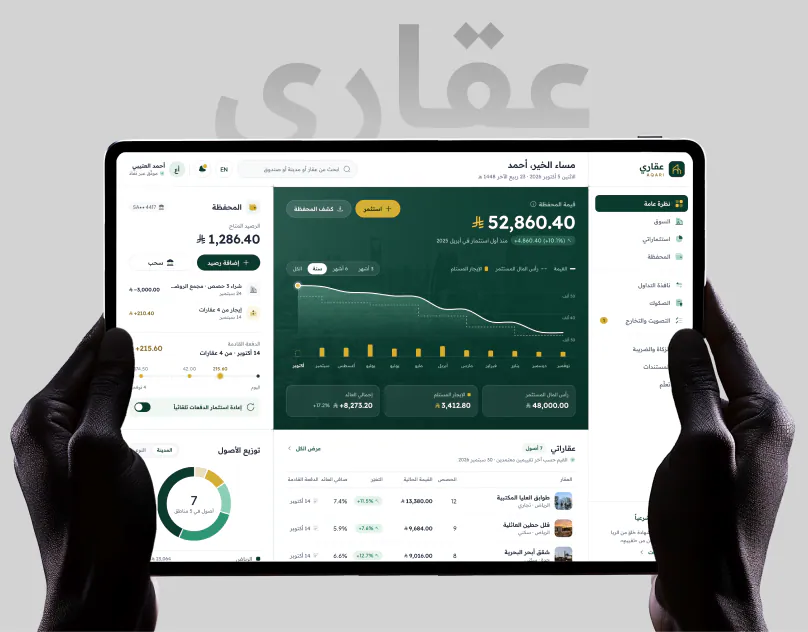
Investing, lending and insurance products come with terms most people don’t understand. Explain them at the moment they matter, not in a document people skip. For AQARI, a Shariah-compliant property investing platform, investors had to understand ownership structures, sukuk, valuations, rent payouts and Zakat before committing money. We designed 94 screens, Arabic first, that explain each one in context instead of hiding them in legal text, while carrying regulated steps such as identity verification and investor suitability.
7. Insight that helps, not more noise
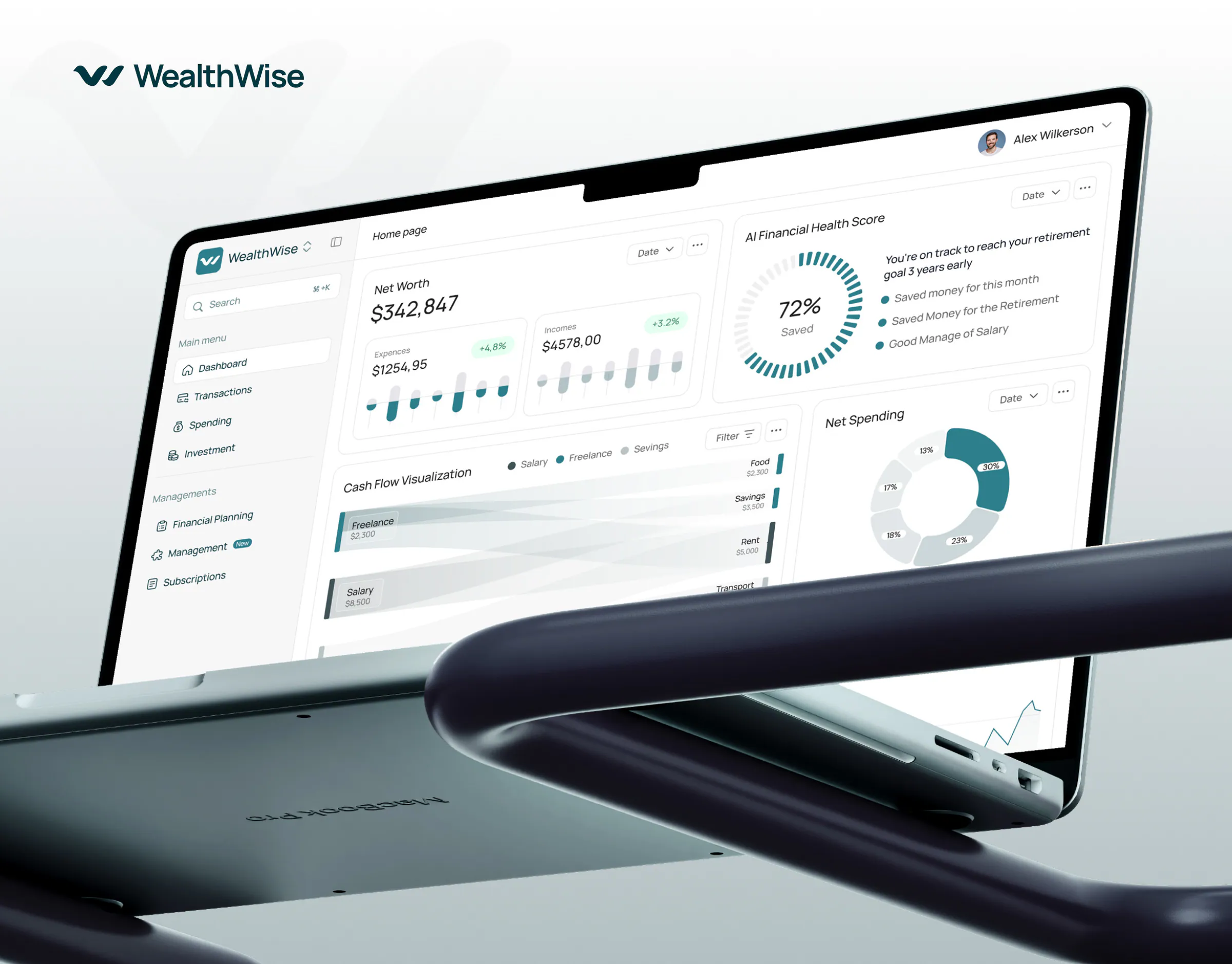
If your app uses AI or analytics, keep insights short and next to the data they describe. For WealthWise, a personal finance dashboard, we organized the product around three questions people actually ask about their money and designed AI insights with restraint, so they reduce stress instead of adding alerts. For Nexfolio, AI forecasts sit beside the portfolio data with a confidence score.
8. Accessibility from the start
Financial services must work for everyone, and accessibility issues in onboarding or payments block people from their own money. Design with sufficient contrast, large enough touch targets, screen reader labels for amounts and charts, and authentication that doesn’t rely on memory or puzzles.
For more examples of these patterns in real products, see our guide to fintech app design and our mobile app design and web app design services.
What to include in a fintech MVP
A fintech MVP should be narrow but complete. Narrow means one audience and one core money action. Complete means the compliance, support and failure paths for that action all work.
| Priority | Include | Examples |
|---|---|---|
| Must have | Everything the core action needs to be legal, safe and supportable | Sign-up and identity verification, the core money action, balances and history, MFA, help and dispute reporting, admin and support tools |
| Should have | What makes the core action pleasant to repeat | Notifications, saved recipients, statements, basic insights |
| Could have | Nice additions once the core works | Budgeting, rewards, referrals, extra currencies |
| Won’t have yet | Features that add new regulated activities | Lending, investing or crypto in a payments MVP |
Our guides to what an MVP means in software development and MVP development cost explain how to scope an MVP more generally.
How much does it cost to build a fintech app?
There is no independent survey of fintech app costs. Every figure you will find comes from a development agency estimating its own projects, so treat them as rough ranges, not benchmarks.
| Published by | What they estimate | Range |
|---|---|---|
| MadAppGang | Simple to feature-rich fintech apps | $30,000 to $40,000 for a simple app, $500,000+ for a feature-rich one |
| Bolder Apps | Basic, mid-level and complex apps | $80,000 to $215,000+ (basic), $220,000 to $365,000+ (mid), $440,000 to $730,000+ (complex) |
| WiserBrand | A card wallet built on banking as a service | $300,000 to $500,000 |
What moves the cost most is not the number of screens. It is the regulated activity, the number of providers to integrate, the ledger and reconciliation work, security testing, the partner bank’s requirements and how many platforms you launch on. Ongoing costs matter too: provider fees, compliance staff, audits and maintenance continue after launch.
Design is usually a smaller share of the budget than engineering and compliance, but it decides how much of that budget turns into active users. Our fintech app design guide covers design costs and timelines, and our mobile app design cost breakdown explains what drives design pricing.
How long it takes. Published estimates for a fintech MVP range from about three months for a narrow product to a year or more for a complex one. In our experience, the design and build are rarely the slowest part. Signing a partner bank and passing its review, or getting licenses if you go alone, often decide the launch date, so start those conversations in step two, not after the build.
Common mistakes when building a fintech app
- Designing before choosing the regulatory path. The partner bank’s requirements will change your onboarding, disclosures and features.
- Designing only the happy path. Failed verification, declined payments and disputes are where trust is won or lost.
- Vague money states. “Processing” without a time or reason creates support tickets and doubt.
- Overstating protection. Implying you are a bank or overstating FDIC coverage invites regulatory trouble and destroys trust when it fails.
- No independent record of funds. The Synapse collapse showed what happens when nobody can say where customers’ money is.
- Too many money features in the MVP. Each one can add a new set of rules, partners and reviews.
- Treating security as a launch task. MFA, encryption and access control have to be designed in from the first wireframe.
How Wolfpixel helps fintech teams
We are a product design partner for fintech companies. We design the onboarding, money flows, dashboards, admin tools and trust patterns, test them with users, and hand them over with a design system your engineers can build from. Licensing, compliance programs and backend engineering stay with your attorney, partner bank and development team, and we design to their requirements. Our fintech work includes the ZenPay wallet, the AQARI investment platform, Nexfolio and the Pinvet brand and website.
Sources and method
We reviewed every source below in November 2026. Regulations change, so check the current text with your attorney before you rely on it.
- 31 CFR 1020.220: Customer identification program requirements for banks (Cornell LII), for minimum identity data and verification.
- FinCEN: CDD final rule, for beneficial ownership requirements.
- 31 CFR 1022.210 and 31 CFR 1022.380 (Cornell LII), for money services business AML programs and registration.
- Interagency guidance on third-party relationships (June 9, 2023), for bank responsibility in partnerships.
- CFPB: Regulation E, 12 CFR 1005.11, for error resolution timelines.
- FTC: Safeguards Rule, what your business needs to know, for security program, MFA, encryption and breach notification requirements.
- PCI Security Standards Council: Countdown to PCI DSS v4.0 and PCI DSS v4.0.1, for the current standard and effective dates.
- CFPB: Personal financial data rights and its reconsideration page, for the status of the Section 1033 rule, and Cozen O’Connor (April 9, 2026) for the court injunction.
- Apple: App Store Review Guidelines (updated October 16, 2026) and Google Play: Financial services policy, for financial app and loan app rules.
- NIST SP 800-63B-4 (2025), for authentication guidance.
- W3C: WCAG 2.2, for accessibility criteria.
- OWASP Mobile Application Security Verification Standard, for mobile security testing.
- CFPB: Synapse Financial Technologies enforcement action, for the alleged shortfall in customer funds.
- OCC Bulletin 2024-20 (July 25, 2024), for the joint statement on bank and fintech arrangements.
- Stripe: Best practices for building a fintech company, for validation and infrastructure considerations.
- BCG: Fintech’s scaled winners and emerging disruptors (June 2, 2025), for fintech revenue growth.
- Pew Research Center: Payment apps (September 8, 2022), for payment app use and confidence in security.
- Agency cost estimates from MadAppGang, Bolder Apps and WiserBrand.
Our own recommendations
- The app type table, the launch path comparison, the eight steps, the compliance-to-design mapping, the infrastructure table, the design must-haves and the MVP priorities are our own, based on fintech products we have designed at Wolfpixel. They are not legal advice. Project details come from our case studies.
How to Build a Fintech App FAQs
How much does it cost to build a fintech app?
There is no independent survey, so every published range comes from development agencies. MadAppGang cites $30,000 to $40,000 for a simple app and $500,000 or more for a feature-rich one, Bolder Apps gives $80,000 to $730,000+ across three tiers, and WiserBrand puts a card wallet on banking-as-a-service at $300,000 to $500,000. Compliance, the bank partner and integrations cause most of the spread.
How long does it take to build a fintech app?
Published estimates range from about three months for a narrow MVP to a year or more for a complex product. The design and build are often not the slowest part. Signing a bank partner and passing its compliance review, or getting state licenses if you go alone, frequently set the launch date.
Do I need a license to build a fintech app?
It depends on what the app does. Moving or holding customer money usually requires state money transmitter licenses or working under a licensed partner bank or provider. Lending, investing and insurance have their own licensing rules. A budgeting app that only reads data may need none, but it still has privacy and security obligations. Ask a fintech attorney before you design the product around a path.
Do I need an LLC to start a fintech app?
An LLC is not legally required to start an app, but a fintech app effectively needs a registered business. Apple’s App Store guidelines say apps in banking and financial services should be submitted by a legal entity that provides the services, not by an individual developer, and bank partners will only contract with a company. This is general information, not legal advice.
How do you start your own fintech company?
Start with an underserved audience and a problem you can solve better than existing banks or apps, then check that customer acquisition cost will stay below customer lifetime value. Next, choose a regulatory path, either a partner bank or your own licenses, with a fintech attorney, design and test the critical journeys, build a narrow MVP and launch to a small group first.
What is banking as a service?
Banking as a service, or BaaS, lets a company that is not a bank offer accounts, cards or payments by working with a licensed bank, often through a technology platform that connects the two. The bank holds the charter and stays responsible for compliance, while the fintech owns the product and the customer experience.
Is money in a fintech app FDIC insured?
Only if it is held at an FDIC-insured bank and the arrangement qualifies for pass-through coverage, and FDIC insurance only protects against the failure of the bank itself, not the failure of a fintech company or a middleman. Regulators have warned fintechs against misrepresenting deposit insurance, so the wording in your app should be reviewed by counsel and your partner bank.
What tech stack is used for fintech apps?
Common choices are Swift and Kotlin or a cross-platform framework such as React Native or Flutter for mobile, a backend in Node.js, Python, Java or Go, a relational database such as PostgreSQL for the ledger, and a major cloud provider. Most of the financial capability comes from integrated providers for banking, cards, payments, identity verification and fraud.
Planning a fintech product?
Tell us what your app does and who your partners are. A senior product designer replies within 4 business hours with a plan for the onboarding, money flows and trust design, and a fixed quote.

Was this article helpful?

Written by
Masuder Rahaman
Founder & CEO | Brand Design Director at Wolfpixel
Masuder Rahaman is the Founder & CEO of Wolfpixel and the Brand Design Director with 8+ years of experience. He oversees Wolfpixel’s fintech product design work, from wallets to investment platforms. In this article, he explains the steps, launch paths and compliance rules that shape a fintech app, and the design decisions that decide whether people trust it. Wolfpixel offers the fintech product design services discussed in the article.
View all articles